
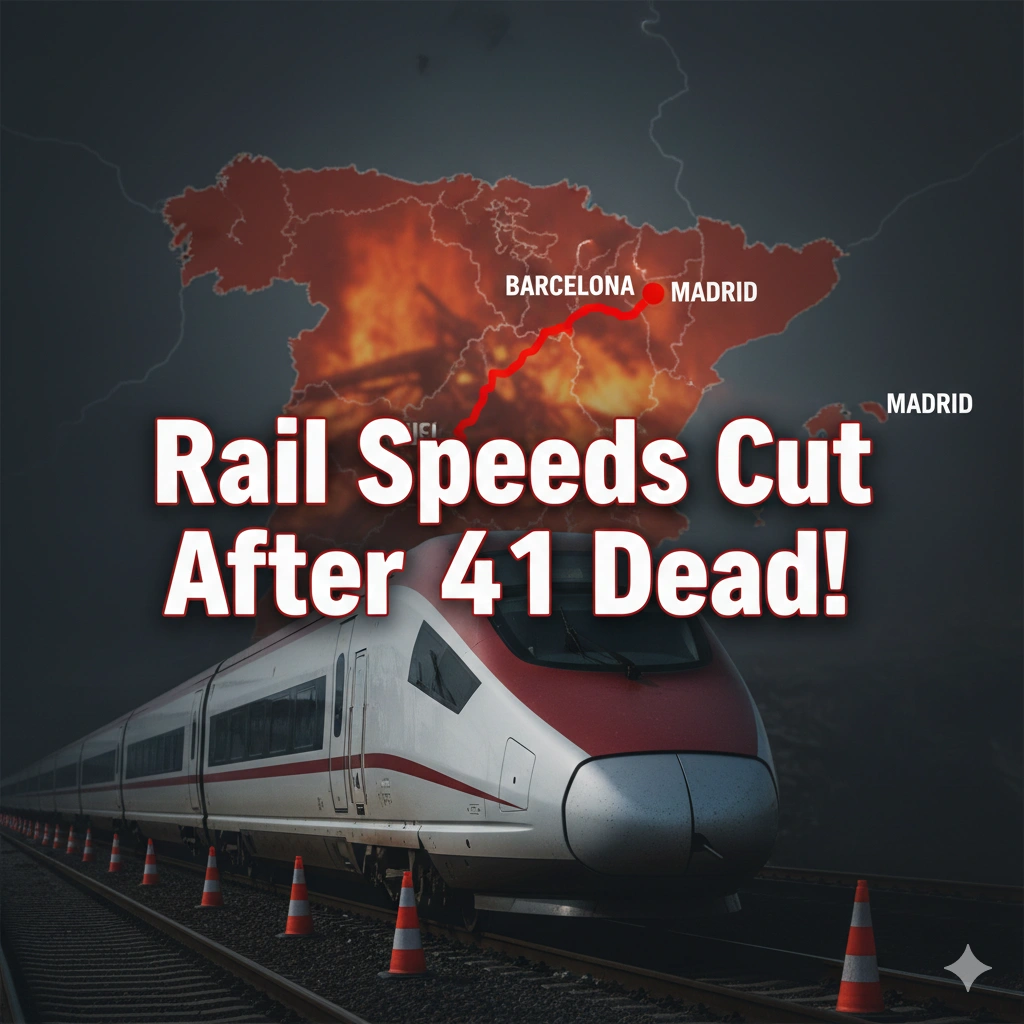
Barcelona High-Speed Rail services between Madrid and Barcelona have temporarily reduced speeds to 160 km/h following safety concerns after a tragic collision near Córdoba. The slowdown affects a 187 km stretch from Mejorada del Campo near Madrid to Cetina before Calatayud, after drivers reported track holes.
The decision comes just days after the catastrophic accident on January 19, 2026, when an Iryo train from Málaga, carrying 317 passengers, derailed and collided with a Renfe Alvia train with 200 aboard. The crash resulted in 41 deaths, numerous injuries, and widespread disruption across Spain’s high-speed rail network.
Immediate Safety Measures and Track Inspections
Adif, Spain’s railway infrastructure operator, implemented the speed reduction following driver-reported track anomalies. The measure is temporary and aimed at preventing further incidents while overnight inspections of rails, signaling systems, and other infrastructure components are completed. Officials indicated that normal operations could resume soon if the tracks are cleared and deemed safe.
The slowdown aligns with voluntary slowdowns initiated by Semaf train drivers, who insisted on cautious operations after the accident. Their action emphasized the need for thorough safety verification before trains return to full speed.
Union Disputes and Sabotage Claims
Union representatives have clashed with the Ministry of Transport over speculation that sabotage may have contributed to track instability. Authorities, however, have dismissed these claims as opportunistic, stating that the speed restriction is purely a safety precaution rather than a response to labor disputes.
While the temporary speed limit has caused delays and travel disruption, officials insist that passenger safety remains the top priority, and Adif teams are working overnight to restore full operational speeds as quickly as possible.
The Córdoba Collision: Impact and Investigation
The January 19 collision occurred at 19:39, when the Iryo train derailed, veering approximately 4 meters off the tracks before colliding with the oncoming Alvia train. Several carriages toppled, and tracks were blocked, forcing emergency teams to respond rapidly.
Prime Minister Pedro Sánchez visited the scene, declaring three days of national mourning and promising a comprehensive investigation. Authorities are analyzing all factors, including infrastructure maintenance, signaling accuracy, train speeds, and potential operational errors, to determine the cause of the disaster.
Public Response and Operational Outlook
Passengers and affected families have expressed shock and concern over railway safety. Transport officials predict that normal high-speed services could resume by Wednesday, provided inspections confirm no additional risks.
Authorities face the challenge of balancing rapid restoration of services with the necessity of rigorous safety checks, ensuring that travelers remain secure on Spain’s high-speed rail network.
Moving Forward: Resilience and Safety on Barcelona High-Speed Rail
The temporary slowdown underscores the importance of continuous safety monitoring and maintenance for high-speed rail lines. Adif and Renfe have pledged enhanced surveillance, preventive repairs, and stricter operational protocols to prevent similar accidents in the future.
The Barcelona High-Speed Rail network remains a key component of Spain’s transportation infrastructure, connecting major cities efficiently while requiring strict adherence to safety standards. Authorities are committed to restoring confidence in the system and ensuring that passengers can travel securely at high speeds.
For more news, visit 360 News Orbit