
Spain Tourism 2025 reached record-breaking levels, welcoming 97 million international visitors last year, up 3.5% from 2024. Total tourist spending surged to €135 billion, growing at twice the pace of arrivals, making tourism one of the country’s most vital economic sectors.
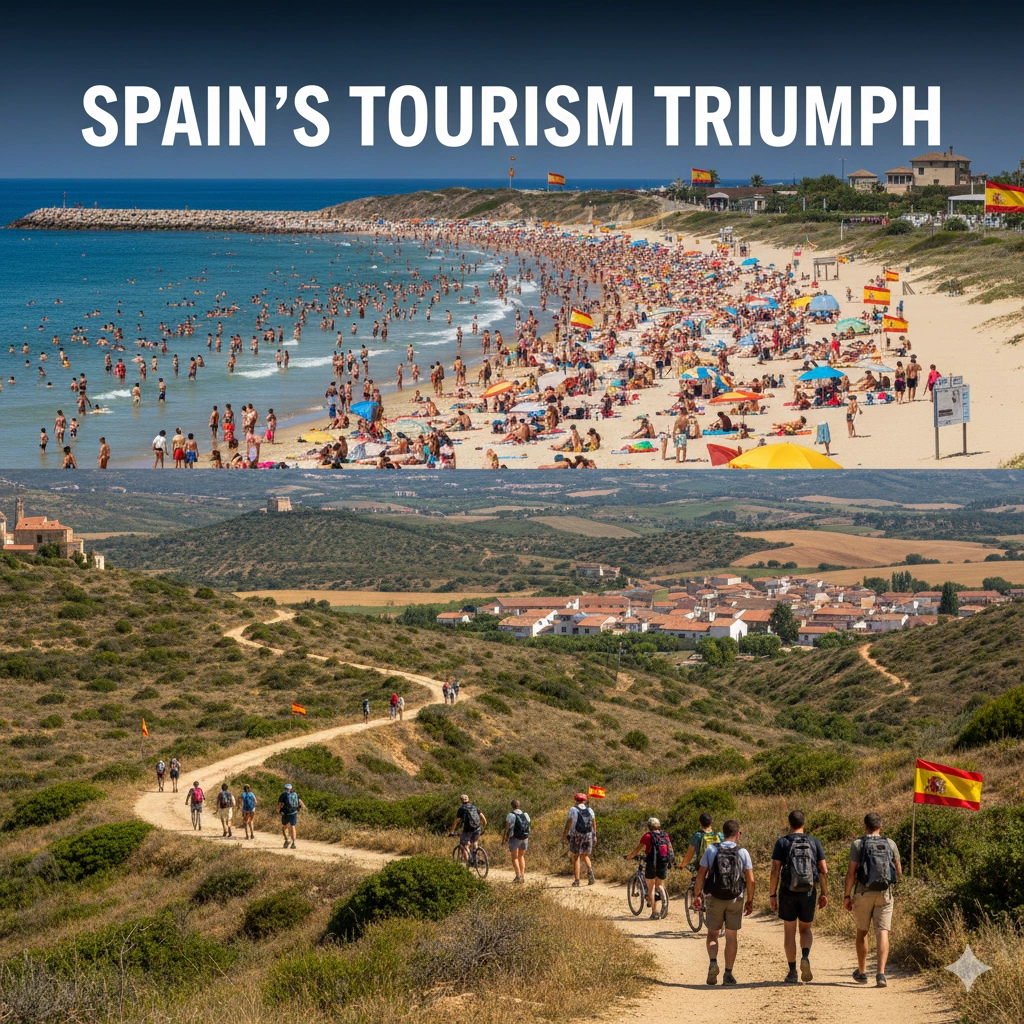
Despite narrowly missing the 100 million forecast, Spain Tourism 2025 highlights the nation’s continued appeal for global travelers, with strong contributions from the United States, the United Kingdom, and other long-haul markets. Inland and rural destinations experienced unprecedented growth, reflecting efforts to diversify travel and relieve pressure on overcrowded coastal hotspots.
Visitor Trends and Spending Patterns
While arrivals from France and Germany declined slightly due to rising accommodation costs, UK and American tourists fueled the sector’s expansion. Spending growth reached 6.8% since 2024 and 20.4% since 2019, driven by longer trips, off-peak travel, and higher per-visitor expenditure.
Inland areas saw a 60% increase in visitors, compared to 45% along the coasts, as authorities encouraged exploration of rural regions. This shift benefits local economies, balances tourist flow, and promotes a more sustainable travel model for Spain.
Addressing Overtourism and Sustainability
Rapid growth in Spain Tourism 2025 has raised concerns over overtourism, particularly regarding housing, environmental strain, and resident livability. Protests in major cities prompted the government to implement strict short-term rental regulations, marking the first decline in such rentals nationwide.
Officials are also promoting sustainable tourism policies for 2026, including incentives to visit inland destinations, environmental protection measures, and initiatives to prevent overcrowding in coastal areas. These steps aim to balance tourism growth with social and ecological responsibility.
Economic Impact of Spain Tourism 2025
Tourism accounted for 13% of Spain’s total economy in 2025 and contributed around 3% to GDP growth. Beyond hotels and attractions, the sector supports retail, transportation, cultural sites, and local services. Expanding inland tourism strengthens regional economies, creates jobs, and encourages investment in rural areas.
EU Travel Systems and 2026 Outlook
The introduction of EU travel systems, including the Entry/Exit System (EES) and the upcoming ETIAS, will streamline border processes, enhancing efficiency while maintaining security. Early 2026 projections anticipate 26 million arrivals in the first quarter, with spending expected to reach €35 billion, signaling continued momentum.
Authorities aim to surpass the 100 million milestone in 2026 while ensuring sustainable, responsible tourism. By promoting inland exploration, controlling rental markets, and enhancing visitor management, Spain seeks to preserve both economic growth and community well-being.
Spain Tourism 2025 demonstrates the resilience and global appeal of the country’s travel sector, reinforcing Spain’s position as one of the world’s top tourism destinations. With strategic planning and sustainable policies, Spain is poised to achieve record-breaking arrivals in 2026 while maintaining livable, balanced destinations for both residents and visitors.
For more news, visit 360 News Orbit