
The idea of UK MPs’ pay linked to GDP growth has entered the political spotlight after Business Secretary Peter Kyle suggested tying parliamentary and ministerial salaries directly to national economic performance. The proposal, floated on January 25, 2026, aligns with Labour’s broader push to make economic growth the central benchmark for government success.
Supporters argue the move could rebuild public trust by linking politicians’ pay to measurable outcomes, while critics dismiss it as political theatre unlikely to deliver real reform.
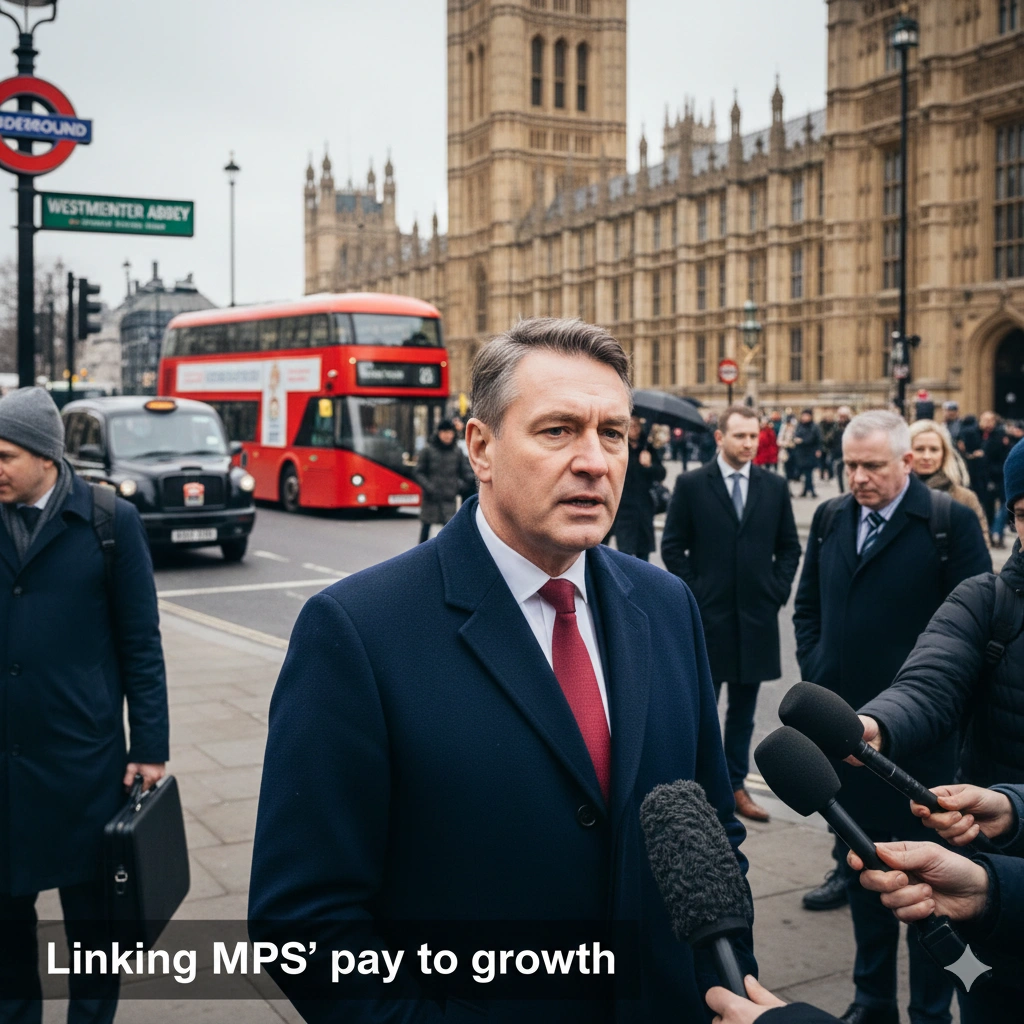
Labour Floats Linking UK MPs’ Pay linked to GDP Growth
Speaking to the Financial Times, Peter Kyle said he wants the Independent Parliamentary Standards Authority (IPSA) to peg MPs’ and ministers’ pay rises to UK GDP growth, replacing the current formula used to calculate salaries.
Kyle argued that such a change would sharpen Westminster’s focus on the economy and force politicians to consistently prioritise policies that drive growth.
According to Kyle, strong economic performance would demonstrate that the country is “fulfilling our potential,” while weak growth would clearly signal underperformance at the top of government.
How MPs’ Pay Is Currently Set
At present, IPSA determines MPs’ pay using a mix of indicators rather than a single metric. These include:
- Public-sector pay trends
- Wider economic conditions
- Principles of fairness, transparency, and independence
IPSA has repeatedly said it consults regularly on how remuneration should be set and reviews its methodology to reflect changing economic and political conditions.
Linking pay explicitly to GDP growth would represent a major shift in how parliamentary salaries are calculated and could require legislative and regulatory changes.
Critics Call the Proposal Political Theatre
The suggestion has drawn a mixed response across Westminster, including from within Labour itself. Kyle acknowledged that the idea of UK MPs’ pay linked to GDP growth is unpopular with some Labour MPs, many of whom argue it oversimplifies complex economic realities.
Critics of UK MPs’ pay linked to GDP growth argue that:
- GDP growth is heavily influenced by global factors beyond MPs’ direct control
- Linking pay to growth could encourage short-term policymaking over long-term reform
- The proposal risks being viewed as symbolic rather than practical
Some observers also question whether it would meaningfully change policymaking behavior in Parliament or simply serve as a political signal rather than a structural reform.
Supporters Say Performance-Based Pay Could Rebuild Trust
Supporters of the proposal counter that linking pay to growth could help restore public confidence in politics by aligning politicians’ incentives with national outcomes.
Business groups have long complained that local MPs can delay or reshape projects that would otherwise support growth, including developments in:
- Housing
- Energy infrastructure
- Transport and logistics
By tying remuneration to GDP growth, advocates argue MPs may become more accountable for decisions that either enable or hinder economic expansion.
Civil Service Reforms Add to Labour’s Delivery Push
The debate over MPs’ pay comes alongside wider reforms aimed at improving government performance. Separately, Cabinet Office minister Darren Jones has outlined plans to:
- Concentrate bonuses among fewer senior civil servants
- Make it easier to dismiss underperformers
- Introduce clearer, minister-set key performance indicators (KPIs)
Jones described the effort as part of a broader attempt to “rewire” the state for delivery, reinforcing Labour’s message that performance and outcomes should matter more across the public sector.
Political Context and Economic Strategy
Labour has placed economic growth at the heart of its policy agenda, arguing that higher productivity and investment are essential to improving living standards and funding public services.
The proposal to link UK MPs’ pay to GDP growth fits into this narrative, even as it exposes tensions within the party about how far incentive-based reforms should go.
Conclusion
The suggestion to link UK MPs’ pay to GDP growth has ignited a sharp political debate over accountability, incentives, and economic leadership. While supporters see it as a bold way to align pay with performance, critics warn it risks oversimplifying complex economic challenges.
Whether the proposal gains traction or fades as political signaling, it underscores Labour’s determination to frame growth as the ultimate test of government success.
For more details & sources visit: Financial Times
For more updates about the United Kingdom, visit our UK news page.