
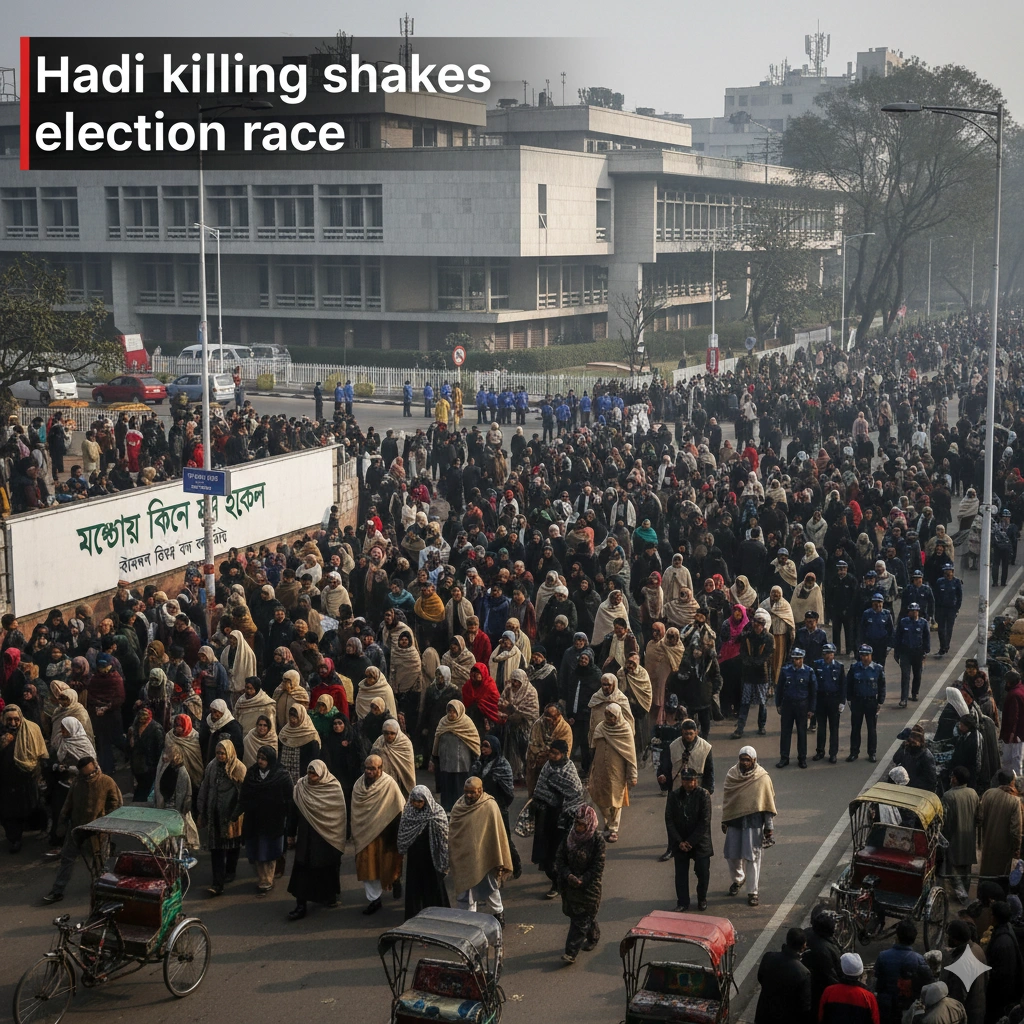
The recent killing of student leader Sharif Osman Hadi has created a significant Bangladesh vote impact in Dhaka, as the country approaches elections following Prime Minister Sheikh Hasina’s departure. His death in December, and the massive public funeral that followed, has become a new political fault line, drawing attention to corruption, cultural identity, and governance issues that resonate with voters. Analysts suggest Hadi’s death has amplified political debates in Bangladesh, influencing both supporters and rivals as the election period unfolds.
Sharif Osman Hadi’s Rise and Popularity
Sharif Osman Hadi rose to prominence through viral social media exchanges and plainspoken Bangla messaging that connected with Dhaka’s lower-middle-class population. His appeal blended anti-corruption sentiment with efforts to reshape cultural power, presenting himself as a religiously grounded, outsider candidate willing to challenge entrenched networks.
Hadi’s growing popularity challenged traditional political hierarchies, particularly after years of Awami League dominance over cultural institutions. He launched a cultural organization to promote an alternative, Islamic-leaning identity, further distinguishing himself from mainstream candidates. Analysts argue this combination of grassroots appeal and cultural activism contributed to the enduring public mourning and the political weight of his death.
The Political Fallout and Bangladesh Vote Impact
The killing of Sharif Osman Hadi has created a noticeable Bangladesh vote impact, with many voters viewing his death as the martyrdom of an “unfinished agenda.” Analysts warn that political rivals or allies could exploit the incident, either to consolidate power or rally public sentiment.
Observers suggest that the issues Hadi championed—culture, identity, and clean governance—will remain central to political discourse in Dhaka. Parties preparing for the upcoming elections are now factoring these concerns into their campaign strategies, aware of the influence Hadi’s death has on voter perceptions and engagement.
Dhaka’s Election Dynamics Post-Hadi
Following Hadi’s death, Dhaka has experienced heightened political awareness among students and young voters. Public mourning has lasted longer than many previous political tragedies, signaling a shift in electoral priorities and engagement. Analysts say that his ability to mobilize grassroots support highlights a new generation of politically active citizens who prioritize transparency, accountability, and cultural representation.
This shift has prompted political parties to reassess traditional strategies, as the Bangladesh vote impact now extends beyond party loyalty to include issues Hadi passionately advocated for. Voter turnout, campaign messaging, and candidate selection are all expected to reflect this evolving political landscape.
Legacy of Sharif Osman Hadi
Sharif Osman Hadi’s influence is expected to persist in Bangladesh’s political discourse. His advocacy for reform, combined with cultural mobilization, has created a framework for opposition voices to engage more effectively with the public. Analysts argue that while Hadi’s death is tragic, the Bangladesh vote impact of his activism and ideals will likely shape electoral outcomes in Dhaka and potentially across the country.
His legacy serves as a reminder of the interplay between youth activism, culture, and politics, highlighting the increasing role of non-traditional voices in shaping Bangladesh’s future elections.
Youth Activism and the Bangladesh Vote Impact
The legacy of Sharif Osman Hadi has sparked unprecedented engagement among Dhaka’s youth, creating a lasting Bangladesh vote impact. Students and young voters are increasingly motivated to participate in elections, inspired by Hadi’s grassroots activism and plainspoken messaging. His ability to connect with the lower-middle-class population demonstrates the growing role of youth in shaping political outcomes.
Political analysts note that youth activism now extends beyond campus politics, influencing broader voter sentiment across Dhaka. The Bangladesh vote impact of this energized demographic is expected to pressure parties to address issues like transparency, accountability, and fair governance in their campaigns.
Cultural Identity and Electoral Influence
Sharif Osman Hadi’s promotion of an alternative, Islamic-leaning cultural identity has also contributed to a noticeable Bangladesh vote impact. His initiatives resonated with voters who feel marginalized by traditional political structures, emphasizing the connection between cultural advocacy and political mobilization. Analysts suggest that culture-driven campaigns are likely to play a bigger role in shaping voter preferences during the upcoming elections.
This evolving cultural dynamic means political parties must now integrate cultural concerns into their platforms to appeal to a broader electorate. The Bangladesh vote impact of Hadi’s approach highlights the intersection of culture, identity, and electoral strategy in post-Hasina Bangladesh, redefining how candidates engage with citizens.
Conclusion
The killing of Sharif Osman Hadi marks a defining moment for Dhaka’s upcoming elections. The Bangladesh vote impact of his death underscores the enduring significance of anti-corruption campaigns, cultural identity, and grassroots activism in influencing political outcomes. As political parties prepare for the post-Hasina era, Hadi’s legacy will continue to resonate with voters and shape campaign strategies across Bangladesh.