
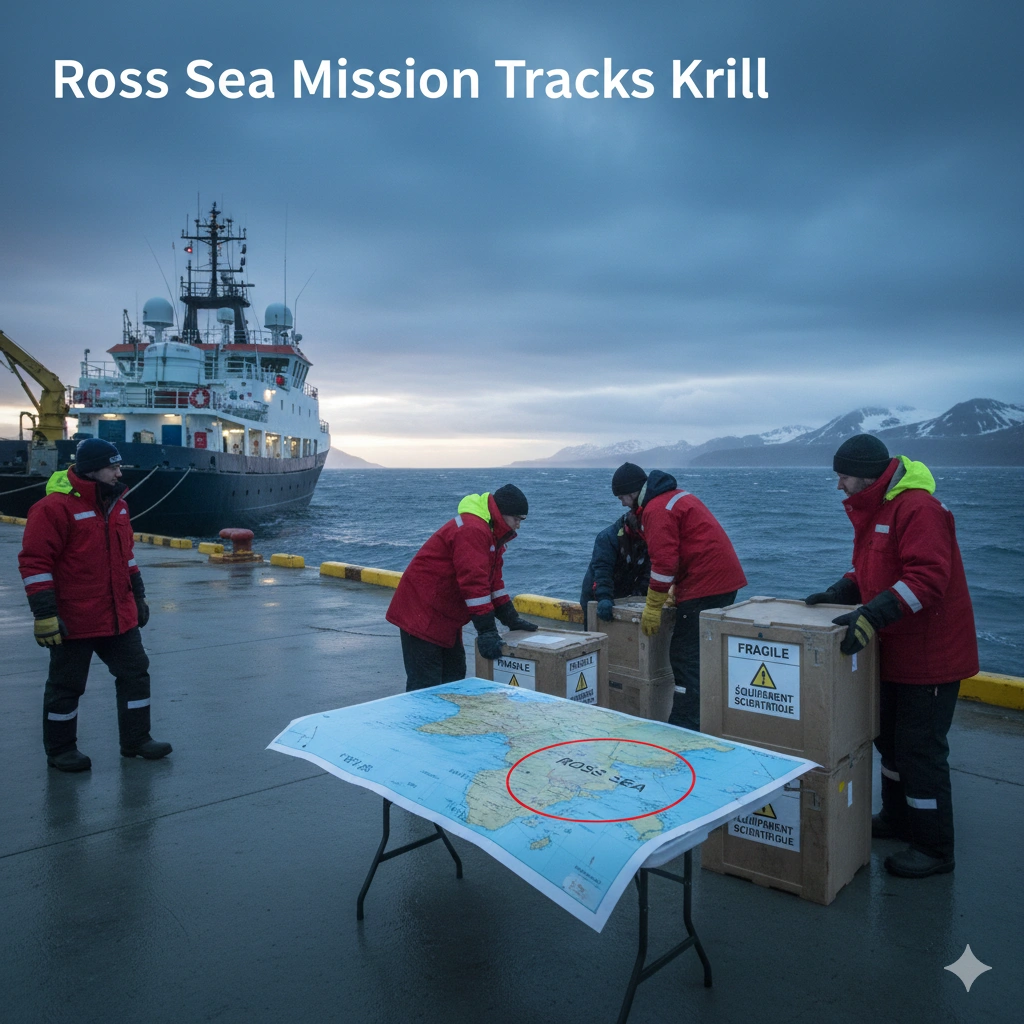
A French-led Antarctica voyage has set sail to the Southern Ocean with a mission to collect crucial environmental data and assess wildlife populations in the Ross Sea. Spearheaded by explorer Jean-Louis Etienne, the expedition aims to reinforce scientific evidence for the Ross Sea Marine Protected Area and guide global decisions on sustainable krill fishing and future conservation strategies.
The mission combines cutting-edge science, environmental monitoring, and public engagement to deliver insights into one of the planet’s most vulnerable marine ecosystems.
Scientific Goals of the Expedition
The French-led Antarctica voyage is operating aboard the ice-capable research vessel Persévérance, part of Etienne’s larger Polar Pod program. The journey spans from Christchurch to Hobart during the austral summer research season, providing an ideal window for monitoring breeding patterns of local fauna and environmental conditions.
Key scientific objectives include:
- Monitoring wildlife reproduction: Penguins, seals, whales, and seabirds are closely tracked to evaluate the effectiveness of existing protections.
- Assessing krill populations: Krill are a keystone species in the Southern Ocean ecosystem. Understanding their abundance and reproduction is critical for determining whether commercial fishing quotas align with natural population cycles.
- Collecting environmental data: Instruments on board measure sea, air, and ice conditions, providing long-term datasets for climate research and marine management.
Advancing Conservation and Policy
The data collected on this French-led Antarctica voyage will inform CCAMLR deliberations (Commission for the Conservation of Antarctic Marine Living Resources) regarding fishing regulations and proposals for additional protected areas, including zones off eastern Antarctica supported by several nations.
By providing robust, evidence-based insights, the expedition strengthens the case for sustainable management of Antarctic ecosystems while highlighting the importance of international cooperation in preserving the planet’s last wilderness.
Innovation and Research Tools
The mission also serves as a testbed for new research technology, including the Tipod floating sampling platform, a prototype leading up to the Polar Pod drifting research station, planned for deployment in 2029. These innovations allow scientists to gather continuous, high-resolution data from remote Antarctic waters, helping bridge gaps in monitoring and ecosystem understanding.
Education and Public Engagement
Beyond science, the French-led Antarctica voyage emphasizes outreach and education, translating complex polar research into accessible lessons for students and the public. Onboard initiatives include storytelling, multimedia content, and real-time updates, designed to inspire the next generation of oceanographers, conservationists, and climate scientists.
By combining rigorous research with public engagement, the mission ensures that its findings are widely shared and contribute to a global understanding of Antarctic ecosystems.
Strengthening Global Collaboration Through Research
The French-led Antarctica voyage not only gathers critical environmental data but also fosters international scientific collaboration. Researchers from multiple countries are participating in the expedition, sharing expertise on marine ecology, climate monitoring, and wildlife protection. This cooperative approach ensures that data is comparable across research programs and helps inform policy decisions on a global scale.
By working alongside scientists from New Zealand, Australia, and other nations, the expedition demonstrates how cross-border partnerships can enhance understanding of the Southern Ocean. The collaboration also supports the creation of standardized monitoring protocols for Antarctic ecosystems, which is essential for evaluating long-term trends in wildlife and krill populations.
Technology and Sustainability in Polar Research
The French-led Antarctica voyage is also advancing sustainable research practices in extreme environments. The expedition uses eco-friendly vessel operations and low-impact sampling methods to minimize interference with the fragile Ross Sea ecosystem. By combining innovative technology with responsible fieldwork, the mission ensures that scientific investigation does not compromise the very habitats it aims to protect.
Moreover, the integration of automated sensors, drones, and remote monitoring tools allows scientists to collect high-resolution environmental and wildlife data with minimal human disturbance. This approach exemplifies how modern polar expeditions can balance scientific ambition with ecological responsibility, setting a benchmark for future Antarctic research missions.
Importance of Protecting the Ross Sea
The Ross Sea Marine Protected Area is considered one of the most pristine marine environments on Earth. Protecting this region is essential for maintaining the health of Antarctic food webs, particularly species dependent on krill. The voyage’s findings will help determine whether current conservation measures are adequate or need adjustment.
For more details & sources visit: RFI (Radio France Internationale)
Read more on Antarctica news: 360 News Orbit – Antarctica