
Sonatrach told to pay $290m after an international arbitration tribunal ruled against Algeria’s state-owned oil company in a long-running dispute with UK-based Sunny Hill Energy over the Ain Tsila gas project. The ruling, confirmed in early January 2026, represents a significant legal and financial setback for Sonatrach and raises broader concerns about contract security and foreign investment risks in Algeria’s energy sector.
The arbitration decision stems from a disagreement that began in 2021, when Sonatrach terminated Sunny Hill Energy’s exploration and production contract for the Ain Tsila gasfield in southeastern Algeria.
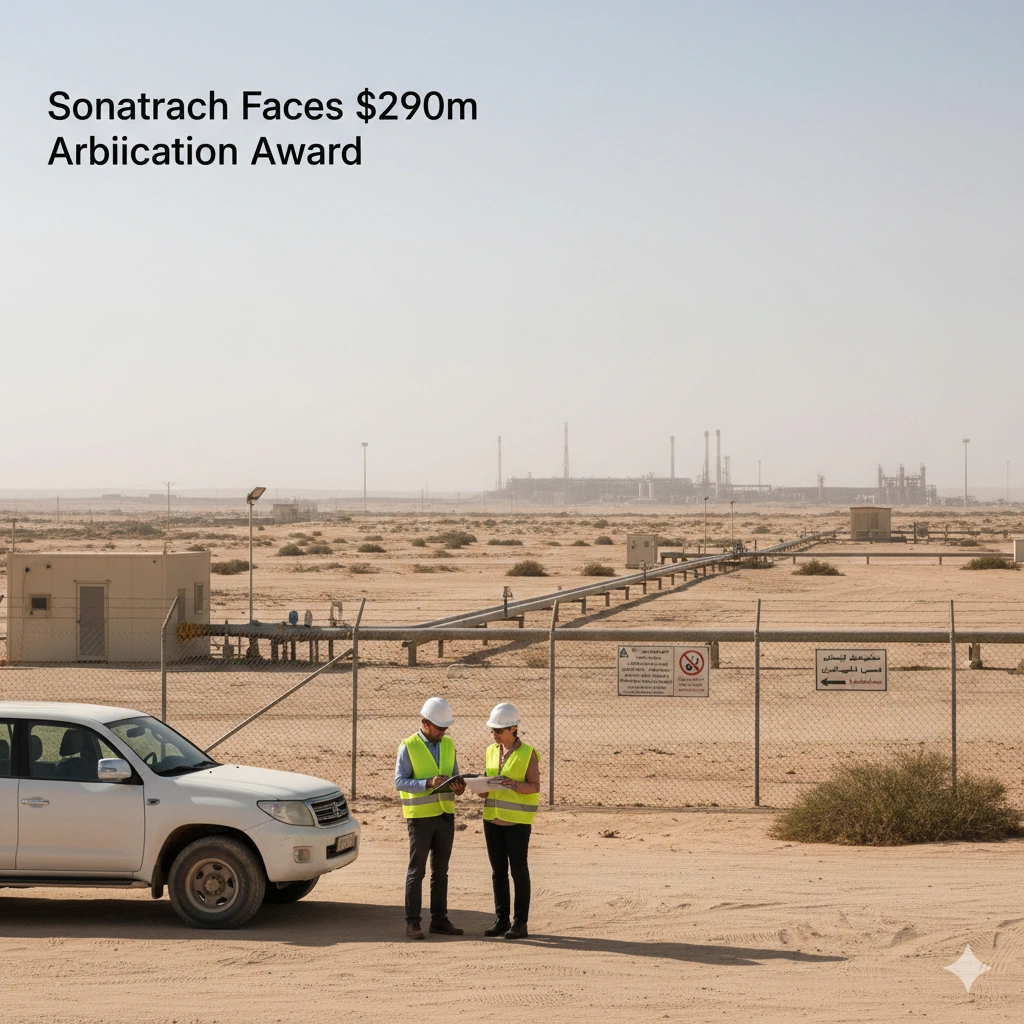
Background of the Ain Tsila Gas Project Dispute
The Ain Tsila gas project was developed through a partnership involving Sonatrach and Petroceltic Ain Tsila, a company linked to Sunny Hill Energy. Sunny Hill stated that it held a 38.25% stake in the project and invested hundreds of millions of dollars during the development phase.
According to Sunny Hill, Sonatrach unilaterally terminated the contract and assumed control of the stake without providing compensation, a move that ultimately led to the ruling in which Sonatrach told to pay $290m following international arbitration.
Sonatrach rejected these allegations, maintaining that the contract termination was legally and contractually justified, and citing non-compliance with agreed obligations as the basis for its decision.
Why Sonatrach Terminated the Contract
Sonatrach maintained that the decision to end the partnership followed Petroceltic’s failure to meet contractual obligations. The Algerian energy giant also noted that Sunny Hill’s involvement in the project had already been reduced from an initial 75% interest at the time the contract was signed.
From Sonatrach’s perspective, the termination was a lawful enforcement of contractual terms, not an unlawful expropriation. This disagreement over compliance and compensation became the central issue reviewed by the arbitration tribunal.
Arbitration Tribunal Orders $290 Million Payment
After reviewing submissions from both parties, the tribunal ruled in favor of Sunny Hill Energy. As a result, Sonatrach told to pay $290m in damages linked to the loss of Sunny Hill’s stake in the Ain Tsila gasfield.
According to The National, a company announcement dated December 11, 2025, confirmed that Sunny Hill received the arbitration award on December 9, 2025. The ruling ordered payments to Sunny Hill’s wholly owned subsidiary, Petroceltic Ain Tsila Limited, subject to recovery from Sonatrach.
While the $290 million award represents a major legal victory for Sunny Hill, it may not mark the end of the dispute.
Sunny Hill Seeks Up to $1 Billion in Compensation
Sunny Hill Energy chairman Angelo Moskov said the company intends to pursue up to $1 billion in total compensation, signaling that further legal or enforcement actions may follow.
Moskov warned that disputes of this nature could discourage foreign investment in Algeria’s oil and gas sector, particularly if international partners perceive contractual protections as weak or unpredictable.
This warning comes at a time when many energy-producing countries are actively competing to attract foreign capital, technology, and expertise.
Implications for Algeria’s Energy Sector
The ruling against Sonatrach could have wider consequences beyond the immediate financial impact. International investors closely monitor arbitration outcomes involving state-owned companies, especially in capital-intensive sectors such as oil and gas exploration.
Cases where contracts are terminated and later overturned by arbitration panels can raise concerns about regulatory stability, legal transparency, and investment security.
For Algeria, which relies heavily on hydrocarbons for export revenue, maintaining investor confidence remains a strategic priority.
Sonatrach’s Position Going Forward
Sonatrach has not publicly indicated whether it will challenge or seek to delay enforcement of the arbitration award. However, enforcement of such rulings can involve complex cross-border legal processes, depending on asset locations and bilateral agreements.
Despite the setback, Sonatrach remains one of Africa’s largest state-owned energy companies, playing a central role in Algeria’s economy and energy exports to Europe.
A Landmark Case for Energy Arbitration
The Ain Tsila dispute highlights the growing importance of international arbitration in resolving conflicts between governments, state-owned enterprises, and foreign investors.
As Sonatrach told to pay $290m, the case serves as a reminder that contractual disputes in the global energy industry can carry long-term financial, legal, and reputational consequences for all parties involved.
For more details & sources visit: The National
For more updates about Algeria, visit the Algeria News Section.