
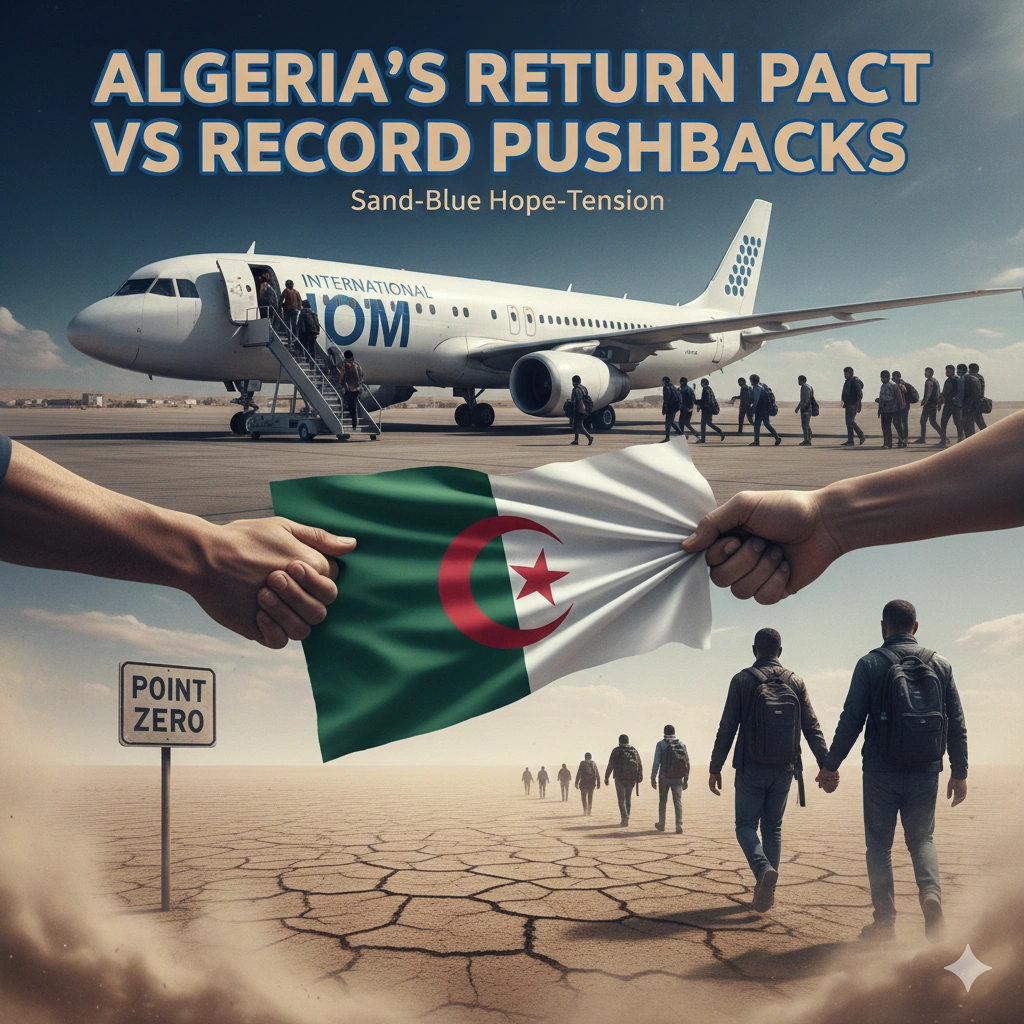
The Algeria-IOM pact emerged as a major development in North Africa’s migration landscape, aiming to strengthen voluntary migrant returns while drawing sharp criticism over record-breaking desert expulsions. The agreement, signed between the International Organization for Migration (IOM) and the Algerian government, focuses on expanding humane return mechanisms—yet it unfolds against the backdrop of 34,236 reported pushbacks into Niger’s desert, raising serious human rights concerns.
This complex situation highlights the growing tension between managed migration policies and on-ground realities across the Sahara migration route.
What the Algeria-IOM Pact Includes
The newly signed Algeria-IOM partnership centers on expanding facilities at Algiers International Airport, including the use of a nearby airport hotel to temporarily house migrants opting for voluntary return. According to IOM data, the program supported more than 9,500 voluntary returns in 2025, offering assistance to migrants returning to countries such as Mali, Nigeria, and Somalia.
IOM Director General Amy Pope, during her visit to Algeria, praised the agreement as a step toward “humane, dignified, and health-focused migration management.” She toured expanded facilities used for:
- Migrant registration and documentation
- Temporary shelter and medical screening
- Coordinated repatriation to countries of origin
These efforts are part of IOM’s broader mission to ensure safe and voluntary returns, particularly for migrants stranded in transit countries.
Record 34,000+ Desert Expulsions Raise Alarm
Despite the positive framing of the Algeria-IOM pact, migrant rights groups paint a much darker picture. According to advocacy organization Alarme Phone Sahara, Algerian authorities carried out 34,236 expulsions to Niger’s “Point Zero” desert zone in 2025, marking a record high.
Humanitarian groups report that many expelled migrants—including women and children—were allegedly left without food, water, or medical assistance. Some reports also indicate fatalities during forced desert crossings, particularly in extreme heat conditions.
Critics argue that these expulsions contradict the humane migration narrative presented alongside the IOM partnership.
Chain Pushbacks Across North Africa
Rights organizations further warn of chain pushbacks across multiple borders, describing a pattern in which migrants are expelled from Tunisia to Algeria, then onward to Niger, often without due process.
These practices, activists say, undermine international protections and expose migrants to severe risks, including dehydration, exploitation, and death. While Algeria maintains that expulsions target irregular migration flows, critics stress the absence of individual assessments and basic humanitarian safeguards.
Algeria’s Response and Policy Shift
Algeria’s Interior Minister Brahim Merad Sayoud has defended the government’s approach, emphasizing increased investment in border management, health screening, and cooperation with origin countries. Officials argue that Algeria has become a frontline migration state, especially as traditional routes through Libya and Morocco shift.
Authorities also highlight ongoing collaboration with international partners, stating that voluntary return programs are designed to offer migrants an alternative to dangerous journeys and exploitation by traffickers.
Balancing Humane Returns and Human Rights
The Algeria-IOM pact reflects a broader regional struggle: balancing state security, irregular migration control, and human dignity. While expanded return infrastructure may improve conditions for some migrants, the scale of desert expulsions continues to draw international scrutiny.
Migration experts stress that long-term solutions must address root causes, including poverty, conflict, and climate stress in origin countries—an area both Algeria and IOM claim to prioritize.
Why This Matters Globally
As migration routes evolve, the Algeria-IOM partnership could influence how other transit countries manage returns. However, without transparent oversight and accountability, critics warn that humanitarian agreements risk coexisting with abusive practices.
The coming months will be crucial in determining whether Algeria’s migration strategy truly shifts toward rights-based governance—or whether record expulsions remain the defining reality.
For more details & sources visit: InfoMigrants
For more updates about Algeria, visit the Algeria News Section.