
In a significant step toward educational recovery and regional cooperation, Syria recognizes Turkish university degrees issued by branches operating in northern Syria—a move hailed by Ankara as a game-changing academic breakthrough. Announced on January 19, 2026, the decision allows Syrian authorities to officially validate diplomas from Gaziantep University and Health Sciences University, both of which have operated northern Syria branches since 2019.
The development is being widely interpreted as a confidence-building measure between Damascus and Ankara and a hopeful signal for Syria’s long-stalled higher education sector amid reconstruction efforts.
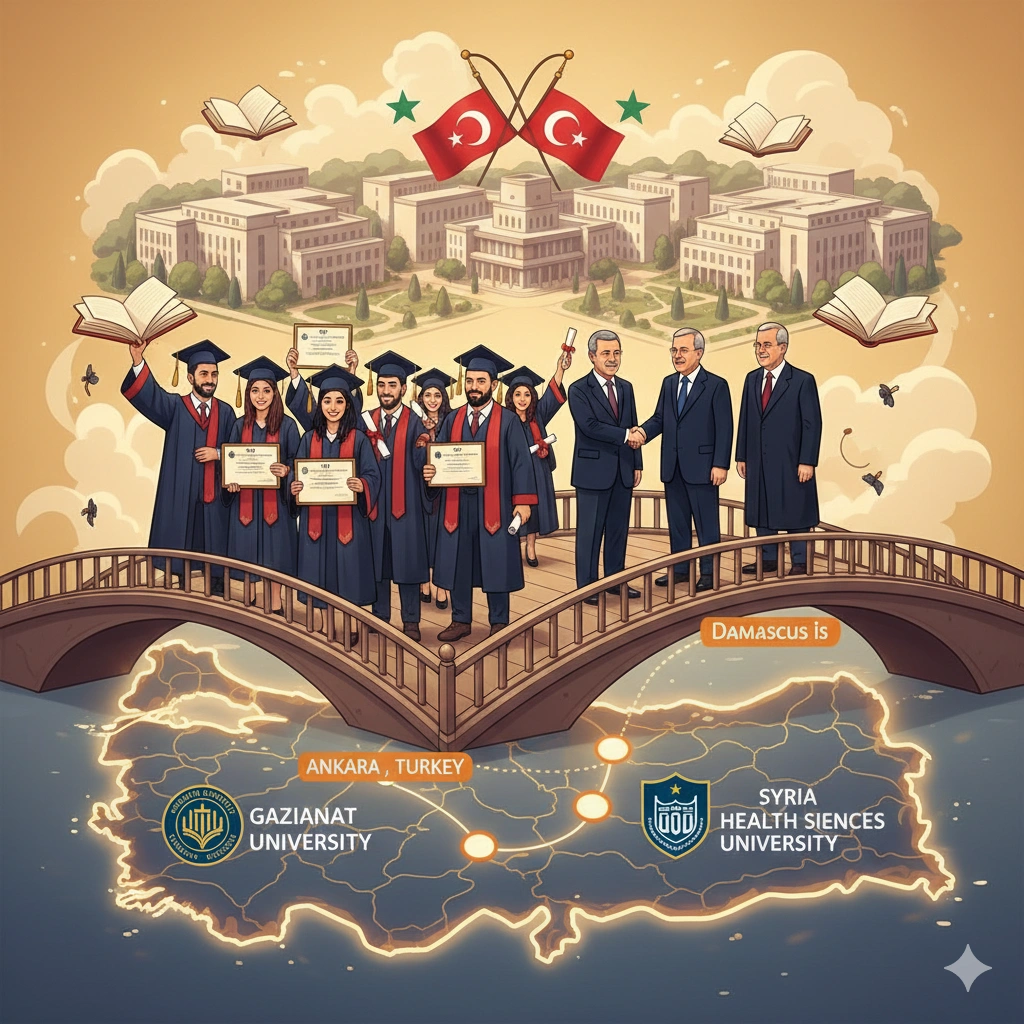
Why Syria’s Recognition of Turkish University Degrees Matters
For thousands of Syrian students studying in northern regions, the lack of formal recognition had long cast uncertainty over their academic and professional futures. With this decision, Syria recognizes Turkish university degrees as valid credentials—granting graduates access to employment, postgraduate studies, and institutional legitimacy.
Turkey’s Higher Education Council (YÖK) President Erol Özvar described the move as a critical safeguard for student rights, emphasizing that years of academic effort would no longer remain in limbo.
Institutional Dialogue Paves the Way
According to official statements, the breakthrough came after sustained institutional dialogue between Turkish and Syrian higher education authorities. Özvar confirmed that the recognition was finalized through direct academic coordination, reflecting a pragmatic approach despite broader political complexities.
Syria’s Ministry of Higher Education has since established a specialized evaluation committee tasked with:
- Verifying issued diplomas
- Streamlining academic records
- Ensuring institutional compliance
This mechanism is expected to accelerate degree validation and remove bureaucratic barriers that previously hindered graduates.
Ankara Praises Damascus for Cooperative Approach
Erol Özvar publicly thanked Syrian Higher Education Minister Marwan Al-Halabi, praising his constructive and collaborative stance throughout the process. He reaffirmed Turkey’s commitment to supporting Syria’s higher education infrastructure, particularly in regions affected by years of conflict.
Ankara views the move as a foundation for expanded cross-border academic cooperation, potentially including faculty exchanges, curriculum alignment, and joint research initiatives.
Turkish Universities’ Role in Northern Syria
Since 2019, Turkish universities—most notably Gaziantep University and Health Sciences University—have established academic branches in northern Syria. As Syria recognizes Turkish university degrees, these campuses have played a vital role in providing Syrian students with access to higher education in:
- Medicine and health sciences
- Engineering and technical fields
- Social sciences and education
Operating under challenging conditions, the institutions have filled a critical void left by damaged or inaccessible Syrian universities. Now that Syria recognizes Turkish university degrees, these academic programs gain long-awaited legitimacy, ensuring graduates’ qualifications are officially validated and respected.
Education as a Pillar of Reconstruction
Analysts note that education is a cornerstone of post-conflict reconstruction, and the decision to recognize foreign-issued degrees reflects a shift toward practical governance solutions.
By choosing to recognize Turkish university degrees, Damascus:
- Protects student investments in education
- Supports workforce development
- Signals openness to institutional normalization
This aligns with broader international views—often highlighted by organizations such as UNESCO—that rebuilding education systems is essential for long-term stability.
Could This Open the Door to Broader Normalization?
While the agreement is strictly academic, observers believe it may indicate a gradual thaw in Syrian–Turkish relations, particularly in non-political sectors such as education, health, and humanitarian services.
If successful, the model could be expanded to:
- Additional universities
- Vocational and technical institutes
- Mutual recognition frameworks
For Syrian students, this would represent a tangible step toward reclaiming normal academic and professional pathways.
Student Impact: Restoring Confidence and Opportunity
For graduates, the announcement delivers more than administrative relief—it restores confidence in the future. Degrees that were once questioned now carry official weight, enabling students to:
- Apply for public and private sector jobs
- Pursue postgraduate education
- Seek international academic recognition
As Syria recognizes Turkish university degrees, education once again becomes a tool of empowerment rather than uncertainty.
Conclusion: A Strategic Step Toward Educational Revival
The decision that Syria recognizes Turkish university degrees marks a pivotal moment for students, institutions, and regional cooperation. While challenges remain, this academic pact offers a practical pathway toward educational revival, reconstruction, and renewed cross-border engagement.
In a region long defined by disruption, the recognition of knowledge and learning may prove one of the most durable foundations for recovery.