
Canada travel warning Cuba has become a major concern for travelers after the Canadian government issued an “Exercise Extreme Caution” advisory on January 15, 2026. The warning highlights worsening conditions across the island, including nationwide blackouts, severe food and fuel shortages, unreliable transportation, and growing safety risks, even in popular tourist resorts.
Once known for its relaxed beach vacations, Cuba is now facing a prolonged infrastructure and economic crisis that directly affects visitors. From daily power cuts and water outages to limited medical care and rising petty crime, Canadian authorities urge travelers to prepare carefully or reconsider non-essential travel altogether.
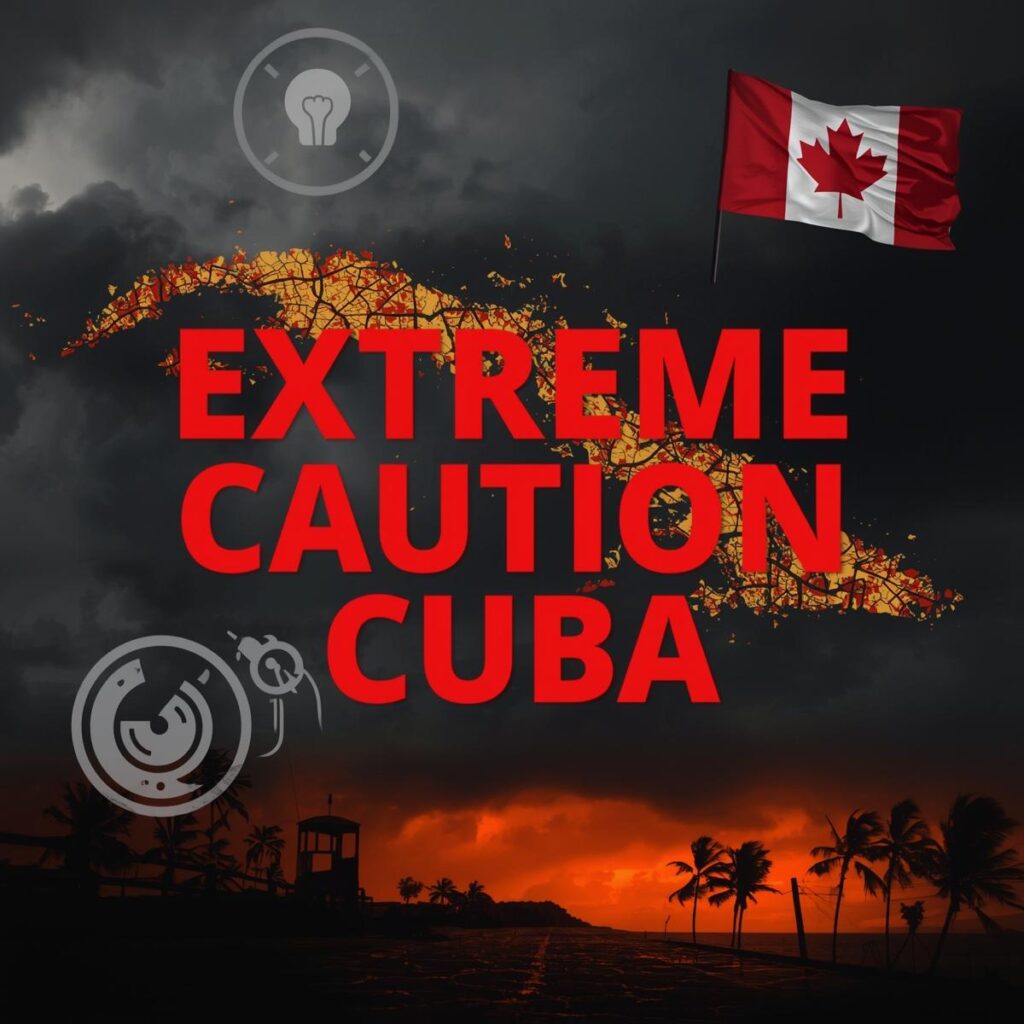
Why Canada Issued an Extreme Caution Warning for Cuba
The Canada travel warning Cuba decision is rooted in Cuba’s prolonged economic and energy crisis, which has intensified over the past year. Aging infrastructure, limited fuel imports, and financial instability have combined to create nationwide shortages that affect nearly every aspect of daily life.
Canadian officials stress that travelers should not expect conditions to improve during their stay. Sudden service disruptions, lack of access to basic necessities, and reduced emergency response capacity mean tourists may face serious difficulties if unexpected situations arise.
Ongoing Power Blackouts Across the Country
Cuba’s national power grid is under severe strain. Authorities have scheduled daily power cuts lasting several hours, but unplanned nationwide blackouts have also occurred, sometimes lasting more than 24 hours.
While large resorts rely on backup generators, fuel shortages mean these systems are not always reliable. Tourists may experience:
- No air conditioning
- Limited lighting
- Disrupted food service
- Cold or unavailable hot water
Even luxury accommodations are affected, reducing the reliability of all-inclusive travel experiences.
Food, Water, Fuel, and Cash Shortages
Severe shortages of essential goods are another core reason behind the Canada travel warning Cuba advisory. Grocery stores often have empty shelves, and when food is available, long queues and rationing are common. Tourists cannot rely on consistent access to meals, especially outside resort areas.
Water shortages are also widespread. Bottled water is difficult to find, and tap water may be unavailable or unsafe in some regions. Even Havana, typically better supplied than other cities, has experienced intermittent water outages affecting hotels and private accommodations.
Fuel shortages have caused widespread transportation problems. Gas stations are overwhelmed, long lines are common, and conflicts sometimes break out as supplies run low. Rental cars may become unusable, public buses are unreliable, and taxis are scarce or unaffordable, leaving travelers stranded.
Rising Crime and Safety Concerns for Tourists
Canada has also cited increased crime as a reason for the Canada travel warning Cuba notice. While Cuba has traditionally been considered relatively safe, worsening economic conditions have led to a noticeable rise in petty crime, particularly in areas frequented by tourists.
Pickpocketing, bag snatching, hotel room theft, and vehicle break-ins are becoming more common. Travelers are especially vulnerable in crowded areas, public transport, and nightlife zones where police presence may be limited.
Although violent crime remains less frequent, assaults and sexual assaults have been reported, including incidents at resorts. Canadian authorities strongly advise travelers to remain vigilant, avoid isolated areas, and report any incidents immediately to local police to obtain an official report, which is often required for insurance claims.
Health Risks and Limited Medical Care
Health concerns play a major role in the Canada travel warning Cuba advisory. Cuba’s healthcare system is under severe pressure due to shortages of medicines, equipment, and trained personnel, particularly outside major cities.
Even basic medical supplies such as painkillers, antibiotics, and first-aid items may be unavailable. Emergency care can be delayed, and medical facilities may lack the resources to treat serious conditions, making travel health insurance absolutely essential.
In addition to infrastructure challenges, Canada warns of health risks such as hepatitis A outbreaks and mosquito-borne diseases including dengue, Zika, and chikungunya. Travelers are advised to get recommended vaccinations, use insect protection, and bring all necessary medications and hygiene products from home.
Entry Rules and Legal Requirements Travelers Must Know
Strict entry and exit rules further complicate travel under the Canada travel warning Cuba advisory. All travelers must carry a valid tourist visa, which is often included in vacation packages but should always be verified before departure.
Canadian travelers must meet several strict entry requirements:
- Tourist visa (often included in vacation packages)
- Proof of travel health insurance
- Completion of the D’Viajeros QR form
- Maximum $5,000 USD or CUP allowed when exiting
- Dual citizens must enter Cuba using a Cuban passport
Certain items are strictly prohibited, including:
- Vapes and e-cigarettes
- Satellite phones
Participation in demonstrations is illegal and can result in detention.
Road Conditions and Travel Safety Tips
Unsafe road conditions are another factor supporting the Canada travel warning Cuba. Roads are often poorly maintained, with large potholes, missing signage, and minimal street lighting, especially outside urban areas.
Driving after dark is particularly dangerous due to broken-down vehicles without lights, livestock on roads, and intoxicated drivers. Accidents can take hours to resolve, and emergency assistance may be limited.
Canadian authorities advise travelers to use official taxis only, avoid night driving, and practice defensive driving at all times. If renting a vehicle, travelers should expect mechanical issues and fuel access problems.
Should You Travel to Cuba Right Now?
Given the current situation, the Canada travel warning Cuba advisory makes it clear that travel carries significant risk. While entry is still permitted, conditions on the ground can change rapidly with little warning.
Travelers who must visit Cuba should plan extensively, bring essential supplies, carry extra cash, and maintain regular contact with family or embassies. For leisure travelers, postponing the trip may be the safest option until stability improves.
For more details & sources visit: voyage.gc.ca
For more updates and related stories, visit our Canada News page.