
The UK day-one parental leave reform marks one of the most significant shifts in British employment law in decades. From April 2026, millions of workers will gain immediate access to parental and sick leave rights from their first day on the job, ending long-criticized waiting periods that forced families to choose between income and care.
Introduced under Prime Minister Keir Starmer’s government through the Employment Rights Act 2025, the reform is expected to benefit up to 18 million workers, strengthening job security for parents, bereaved partners, and low-paid employees while modernizing Britain’s labor framework.
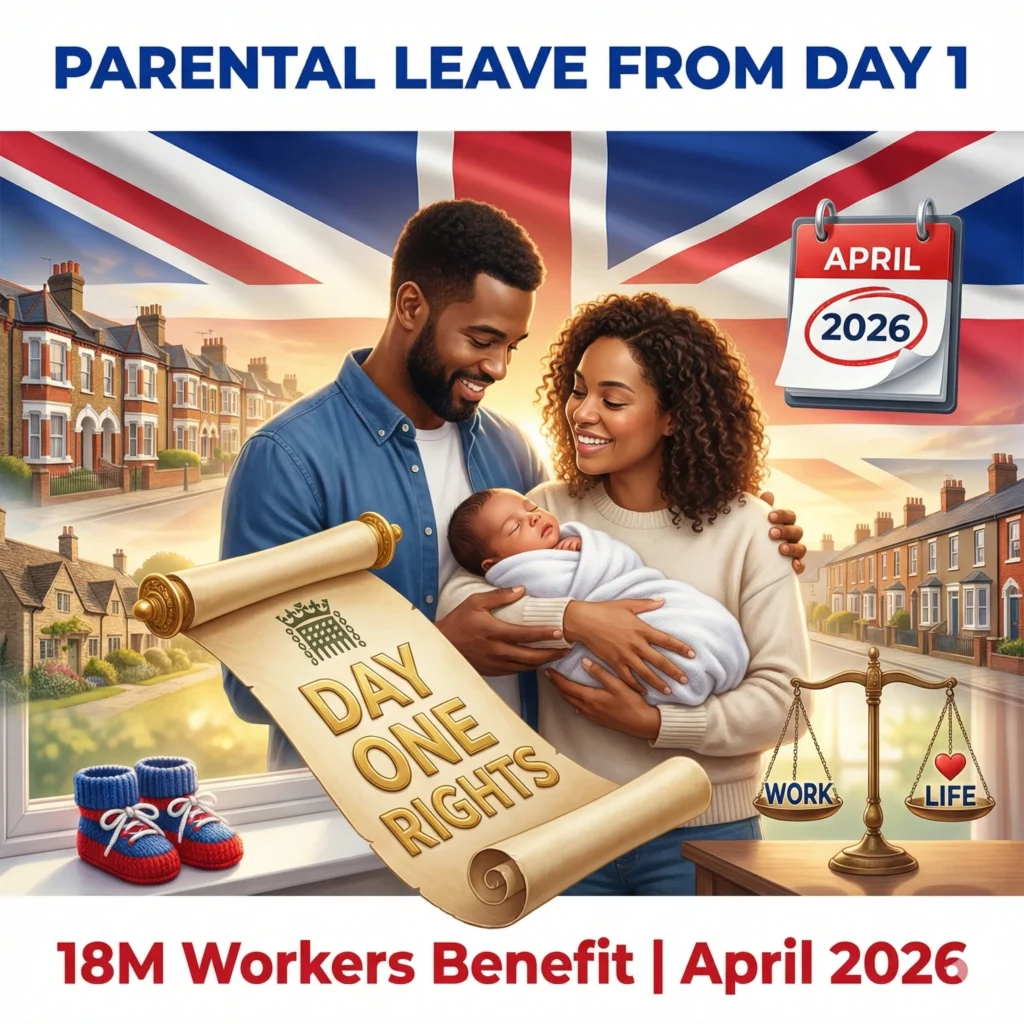
Why UK Day-One Parental Leave Is a Game-Changer
The introduction of UK day-one parental leave eliminates the previous 26-week qualifying period required for most parental benefits. This means new parents no longer need to remain in a job for months before becoming eligible for crucial leave.
Government estimates suggest the reform will immediately grant 32,000 additional fathers access to paternity leave each year, aligning paternal rights more closely with maternity leave entitlements. Additionally, 1.5 million parents will now qualify for unpaid parental leave from day one.
This shift is designed to remove career penalties associated with starting a family, particularly for younger workers and those in insecure employment.
Bereaved Partner Leave Brings Long-Overdue Protection
One of the most impactful elements of the UK day-one parental leave package is the introduction of Bereaved Partner’s Paternity Leave. Under the new law, partners who lose their spouse or co-parent before a child’s first birthday are entitled to up to 52 weeks of statutory leave.
The policy was shaped by years of campaigning, notably by Aaron Horsey, whose advocacy highlighted the lack of legal protection for grieving parents. Previously, bereaved partners relied on employer discretion rather than guaranteed rights.
This reform replaces uncertainty with legal security, ensuring families facing tragedy are supported without fear of job loss.
Statutory Sick Pay Now Available From Day One
Alongside parental reforms, the government has overhauled Statutory Sick Pay (SSP) rules. The three-day waiting period has been abolished, granting immediate access to sick pay from the first day of illness.
This change directly benefits 1.3 million low-paid and part-time workers, many of whom previously received no pay during short-term illness. Officials argue the reform will reduce long-term sickness absence by encouraging workers to recover properly rather than working through illness.
Economic analysts estimate the measure could boost productivity and contribute £150 million annually to GDP by enabling carers and parents to re-enter the workforce through flexible or part-time roles.
Economic and Workplace Impact of UK Day-One Parental Leave
Supporters say UK day-one parental leave will reshape workplace culture by reducing stress, improving morale, and strengthening employer-employee relationships.
The Trades Union Congress (TUC) welcomed the changes, stating the UK is finally aligning with countries that offer stronger worker protections. Meanwhile, advocacy group Working Families emphasized that the reforms remove the “career trap” that previously discouraged parents from changing jobs.
Acas CEO Niall Mackenzie noted that predictable leave rights reduce workplace conflict and support healthier, more productive teams.
A Modern Deal for Workers
Prime Minister Starmer has framed the reforms as part of a broader “modern deal for workers,” aimed at balancing economic growth with social protection. By removing qualifying thresholds, the government hopes to create a labor market where flexibility does not come at the cost of security.
The UK day-one parental leave policy also reflects shifting societal expectations, where caregiving responsibilities are increasingly shared and recognized as economically valuable.
How the UK Compares Internationally
With these changes, Britain moves closer to European nations that already offer immediate parental protections. While the UK still trails some countries on paid leave duration, experts say day-one eligibility is a crucial structural improvement that closes long-standing gaps in employment law.
International labor analysts view the reform as a signal that the UK is recalibrating its workforce model after years of criticism over insecure work.
Conclusion
The UK day-one parental leave reform represents a decisive break from outdated employment practices. By guaranteeing immediate parental leave, bereavement protection, and sick pay, the government is reshaping how work and family life coexist.
For millions of workers, the change offers dignity, security, and choice. For employers, it promises healthier workplaces and stronger long-term productivity. As the reforms take effect in April 2026, Britain enters a new chapter in worker protection.
For more details & sources visit: UK Government
For more updates about the United Kingdom, visit our UK news page.