
Japan is signaling a potential nonnuclear pledge rethink as Prime Minister Sanae Takaichi pushes for a review of the country’s long-standing three nonnuclear principles. These principles, which have guided Japan’s defense and diplomatic posture since World War II, prohibit the possession, production, and hosting of nuclear weapons.
The announcement comes as Tokyo prepares to update key national security documents in 2026. Takaichi’s openness to allowing nuclear-armed allies to bring weapons into Japanese territory has ignited a heated political debate, highlighting the tension between national security priorities and Japan’s historic nonnuclear identity.
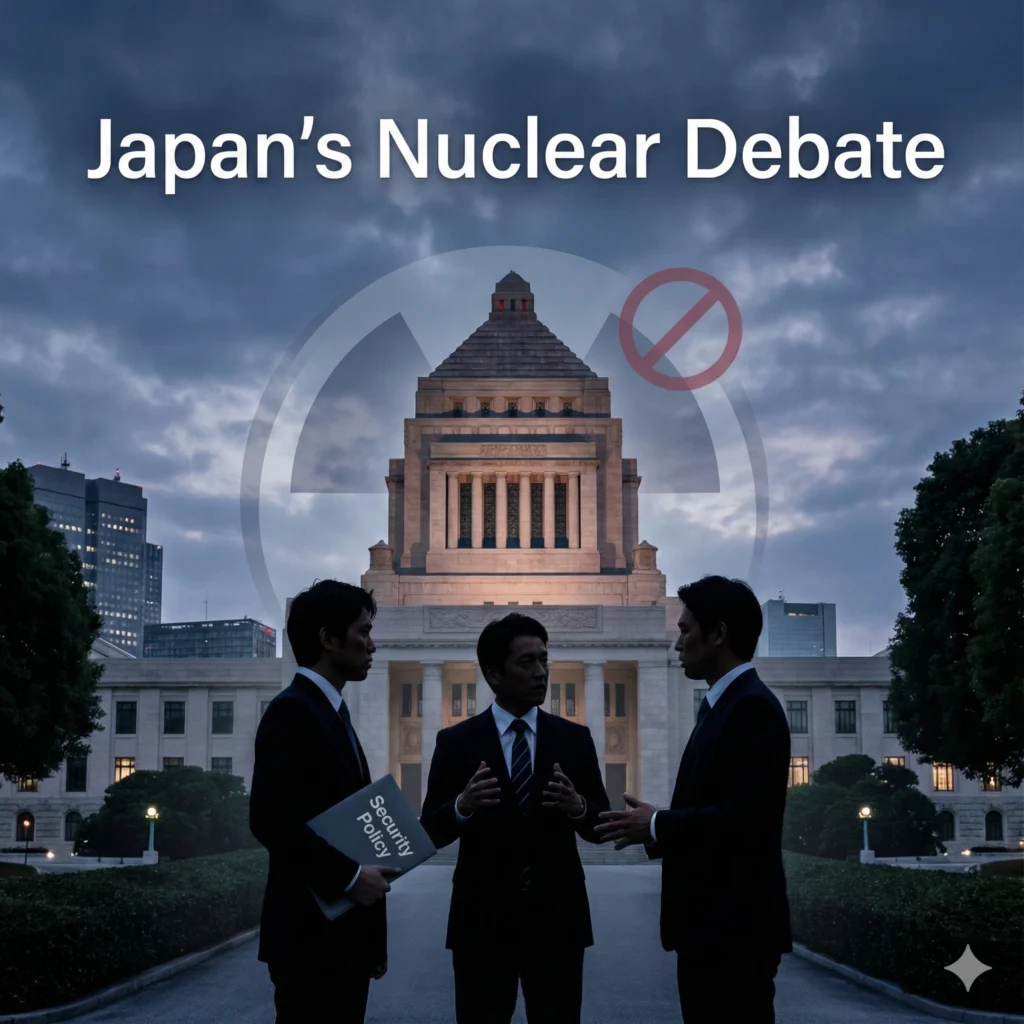
Historical Context of Japan’s Nonnuclear Pledge
Japan’s three nonnuclear principles—never possess, produce, or permit nuclear weapons on Japanese soil—have been a cornerstone of postwar policy. The country remains the only nation to have suffered nuclear attacks, giving the pledge profound domestic and international significance.
For decades, successive administrations have reinforced this stance as part of Japan’s commitment to nonproliferation and regional stability. Revisiting these principles would mark one of the most significant shifts in Japan’s security policy in modern history.
Takaichi’s Push for Policy Review
Prime Minister Takaichi has long expressed skepticism about the current nonnuclear framework. Under her leadership, the ruling Liberal Democratic Party (LDP) and coalition partner, the Japan Innovation Party, are open to debating adjustments, particularly regarding hosting allied nuclear weapons.
Supporters argue that the review is necessary to strengthen Japan’s defense posture amid evolving regional threats, including the growing military presence of neighboring powers. Critics, however, warn that even discussing changes risks undermining decades of diplomatic messaging and could unsettle the Japanese public, who widely support the traditional nonnuclear stance.
Political Resistance and Public Debate
The potential policy shift has already sparked fierce resistance within the government. Senior officials have cautioned that revisiting the principles could provoke domestic unrest and diplomatic friction. Opposition leaders, including Komeito chief Tetsuo Saito, have publicly challenged Takaichi, emphasizing the sensitive nature of the debate.
In November 2025, during a high-profile leaders’ discussion, Saito pressed the prime minister to abandon her bid, underlining the contentious atmosphere surrounding any nonnuclear pledge rethink. Analysts note that public opinion remains heavily aligned with maintaining Japan’s historic nonnuclear identity, making political consensus difficult.
Regional Security Challenges Driving the Nonnuclear Debate
Japan’s potential nonnuclear pledge rethink is influenced heavily by the shifting security landscape in East Asia. Rising military activity from neighboring powers, particularly North Korea’s nuclear program and China’s regional assertiveness, has raised concerns about Japan’s conventional and strategic defenses. Analysts argue that allowing allied nuclear weapons on Japanese soil could enhance deterrence, providing a rapid response option in case of regional crises.
However, such a move would require careful diplomatic handling. Japan must navigate international nonproliferation commitments and maintain credibility among neighboring nations while reassuring its population that its fundamental anti-nuclear values remain respected. Balancing these priorities will be key to any successful revision of the current nonnuclear stance.
Public Opinion and Historical Sensitivities
Public sentiment in Japan remains overwhelmingly cautious regarding nuclear weapons. Surveys indicate that a majority of citizens oppose altering the three nonnuclear principles, reflecting collective memory of Hiroshima and Nagasaki and a broader anti-nuclear cultural identity. Any government decision to revise the pledge risks provoking widespread debate, protests, and political pushback.
The historical context makes the discussion deeply emotional. Takaichi and her party must carefully consider how framing a policy change can avoid public outrage while effectively addressing national security concerns. Engaging in transparent dialogue and emphasizing defensive rather than offensive intent could help manage public reaction during this sensitive debate.
Implications for Japan’s Security and Diplomacy
Revising the nonnuclear pledge would have wide-ranging implications for Japan’s security, diplomatic standing, and relations with both the United States and regional neighbors. A shift could provide more flexibility for joint defense operations but risks criticism from domestic anti-nuclear groups and international nonproliferation advocates.
Japan’s defense strategy may need to balance the demands of modern security threats with decades of public expectation and moral responsibility stemming from its unique history with nuclear weapons.
Final Takeaway
The Japan nonnuclear pledge rethink in 2026 represents a historic moment in national security policymaking. Prime Minister Sanae Takaichi’s review has triggered intense debate among lawmakers, coalition partners, and the public, reflecting deep divisions over the country’s nuclear stance.
As Tokyo navigates this sensitive issue, the coming months will reveal whether Japan adapts its nonnuclear policy to contemporary security challenges or reaffirms its long-standing principles, continuing to serve as a symbol of postwar pacifism and nonproliferation leadership.
For more details & sources visit: Nippon.com (via Jiji Press)
For the latest updates from Japan, visit our Japan news page.