
The Gaza winter humanitarian crisis has reached an alarming new stage as freezing temperatures intensify the suffering of displaced and wounded Palestinians. As winter nights grow colder, hundreds of thousands of people living in makeshift tents and destroyed neighborhoods are struggling to survive without adequate shelter, heating, food, or medical care.
With temperatures dropping to nearly 8°C, families already traumatized by months of violence now face a harsh reality where cold itself has become a daily threat. Aid agencies warn that without immediate and unrestricted humanitarian access, the situation could deteriorate further in the coming weeks.
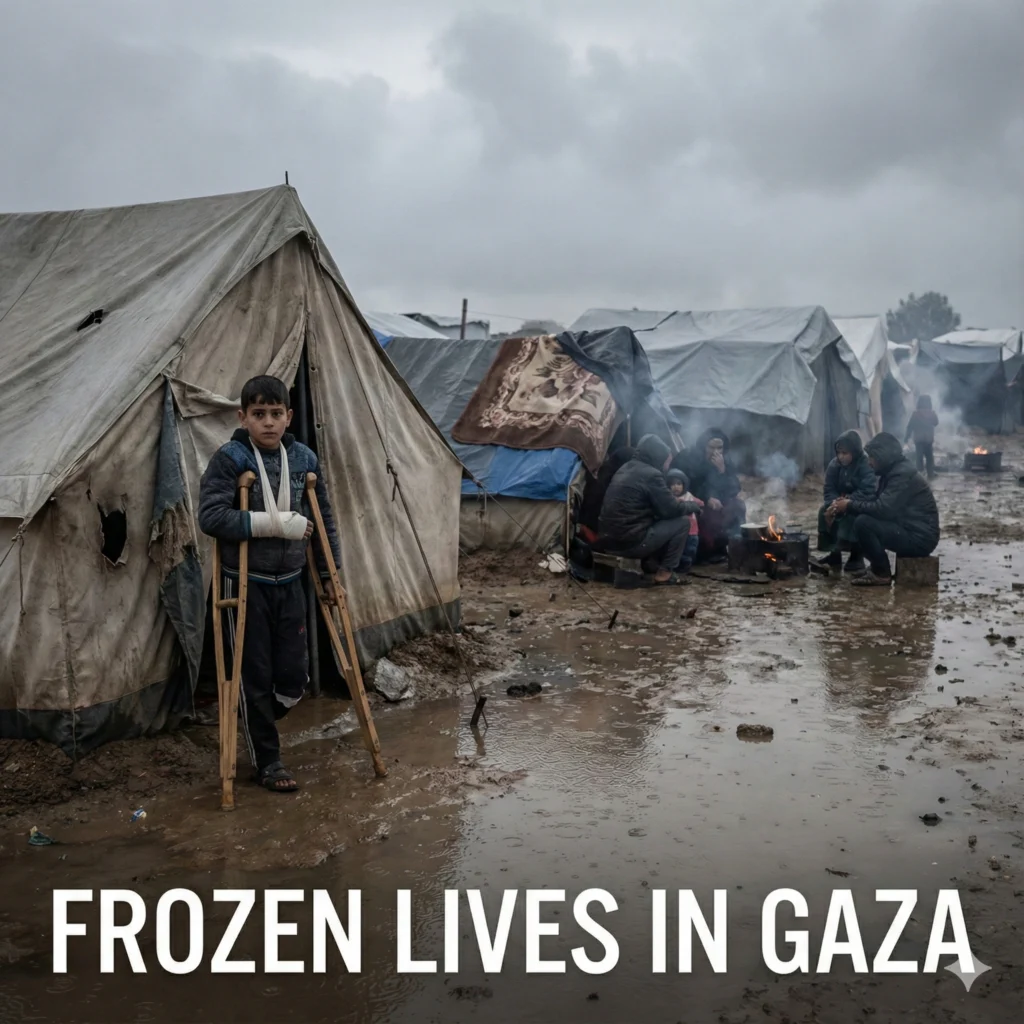
Displaced Families Face Freezing Nights in Tents
The Gaza winter humanitarian crisis is particularly severe for those who have lost their homes. According to the United Nations, nearly 1.5 million Palestinians are now homeless, forced to seek refuge in tents, damaged buildings, or open areas exposed to the elements.
These temporary shelters offer little protection against cold winds and rain. Many families sleep on bare ground with thin blankets, while children and the elderly are especially vulnerable to hypothermia and illness. Aid workers report a sharp increase in respiratory infections as people endure prolonged exposure to cold weather.
Wounded Survivors Endure Cold-Induced Pain
For Palestinians injured during the conflict, winter has brought a different kind of suffering. Nine-year-old Assad al-Madhna, who lost his hand in an Israeli strike, struggles daily with pain worsened by the cold. Metal rods implanted in his leg cause intense discomfort as temperatures drop, making sleep nearly impossible.
Similarly, 18-year-old Waed Murad, the sole survivor of her family, describes how the freezing cold affects the metal implants in her body. Living in an unheated tent, she says the pain becomes unbearable at night, highlighting how winter conditions are compounding war injuries.
Medical professionals warn that cold exposure can worsen healing outcomes and increase the risk of infection, especially when access to proper healthcare remains limited.
Widespread Destruction Limits Shelter Options
The scale of destruction in Gaza has made the Gaza winter humanitarian crisis even harder to manage. UN assessments indicate that nearly 80 percent of buildings across the enclave have been damaged or destroyed. Entire neighborhoods lie in ruins, leaving few safe places for civilians to shelter from winter conditions.
Although humanitarian agencies requested tens of thousands of tents and winter supplies, only a small portion has been delivered. Aid groups say the shortage of shelter materials has forced many families to reuse torn tents or construct makeshift covers from plastic sheets and scrap metal.
Aid Blockages and NGO Restrictions Worsen Crisis
International concern continues to grow over restrictions on humanitarian access. UN officials report that Israel has limited NGO operations and blocked or delayed the entry of essential supplies, including tents, heaters, fuel, and medical equipment.
UN Secretary-General Antonio Guterres has urged Israel to reverse its ban on certain humanitarian organizations and allow aid to flow freely. Several Muslim-majority countries have echoed these calls, warning that continued restrictions are worsening an already catastrophic humanitarian situation.
Humanitarian groups argue that without immediate policy changes, winter conditions could lead to preventable deaths among displaced civilians.
Hunger and Cold Create a Deadly Combination
Beyond the cold, food insecurity remains a central element of the Gaza winter humanitarian crisis. Many families survive on one meal a day or less, making it harder for bodies to withstand low temperatures. Malnutrition weakens immune systems, particularly among children, increasing the risk of illness during winter months.
Aid agencies stress that winter relief must include not only shelter but also food, clean water, and medical support to prevent a broader public health emergency.
Global Pressure Mounts for Humanitarian Access
As images and testimonies from Gaza circulate globally, pressure is mounting on the international community to act. Human rights organizations, UN agencies, and humanitarian groups continue to call for unrestricted aid access and immediate measures to protect civilians from extreme winter conditions.
The situation in Gaza has become a test of international humanitarian responsibility, with winter exposing the full human cost of prolonged displacement and restricted relief.
Final Takeaway
The Gaza winter humanitarian crisis reveals how displacement, injury, and aid blockades intersect to create life-threatening conditions for civilians. Freezing temperatures have turned tents into traps of cold and pain, especially for wounded survivors and children.
Without urgent international intervention, expanded humanitarian access, and adequate winter relief, the Gaza winter humanitarian crisis is likely to deepen further. As winter continues, the survival of countless Palestinians depends not only on weather conditions but on political and humanitarian decisions made beyond Gaza’s borders.
For more details & sources visit: Al Jazeera
For the latest updates from Palestine, visit our Palestine news page.