
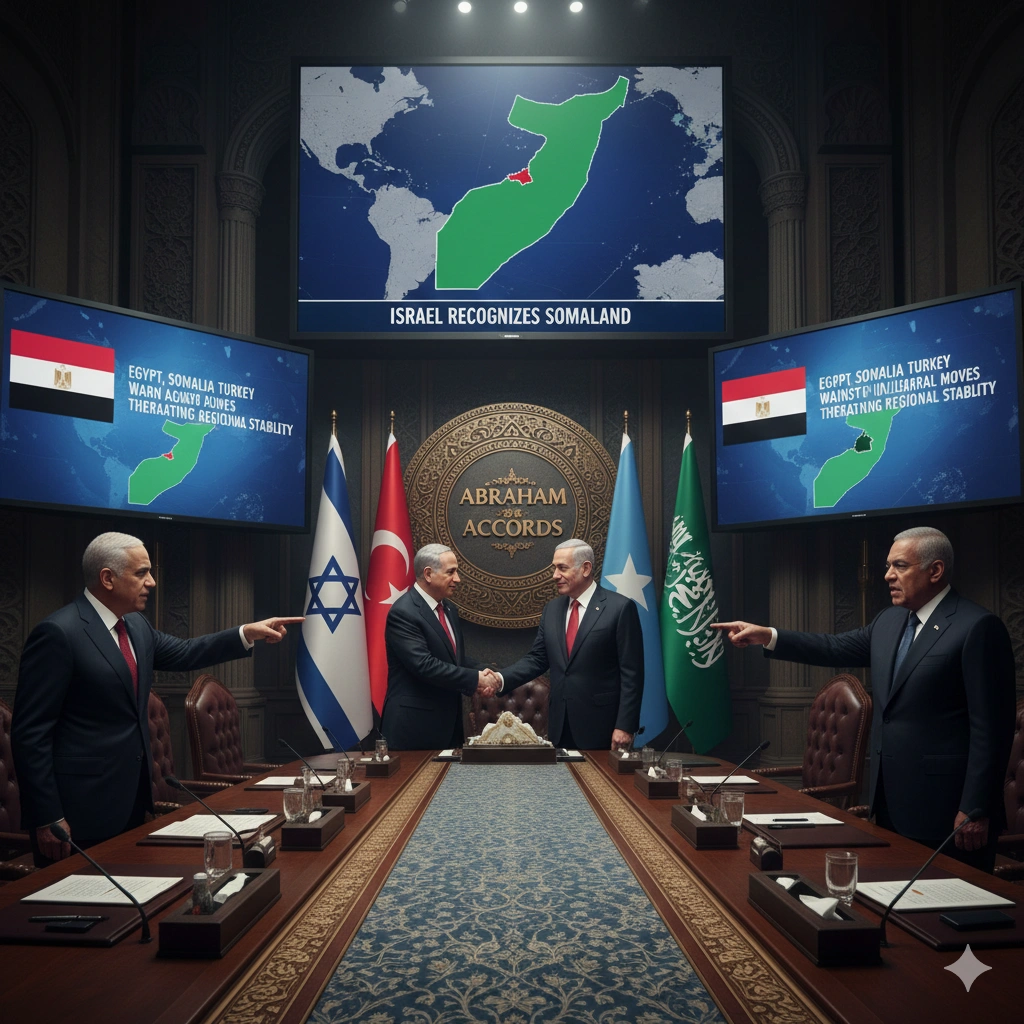
The Israel recognition of Somaliland in 2025 has generated a wave of diplomatic reactions across the Horn of Africa. Israel officially acknowledged Somaliland as an independent state under the Abraham Accords, prompting immediate criticism from Egypt, Somalia, and Turkey. These countries warned that unilateral recognition undermines Somalia’s sovereignty and threatens regional stability.
Analysts suggest that Israel’s move is part of a broader effort to expand diplomatic influence and strengthen ties with emerging partners, particularly following challenges in its international standing after the Gaza conflict. By engaging with unrecognized territories, Israel demonstrates a strategic approach to global diplomacy beyond traditional alliances.
Background on Somaliland and Its Strategic Significance
Somaliland, located in northern Somalia, has long sought independence while maintaining relative political stability compared to southern Somalia. In 2020, Ethiopia became one of the few countries to recognize Somaliland in exchange for a trade corridor, signaling the region’s growing geopolitical importance.
Israel’s recognition follows the framework of the Abraham Accords, which previously included normalization agreements with the UAE, Bahrain, and Morocco. Israeli officials, including Prime Minister Netanyahu, reportedly plan to involve former U.S. President Donald Trump to formalize Somaliland’s participation in the accords.
Somaliland’s strategic location along the Gulf of Aden and control of key ports make it a significant partner for nations seeking influence in maritime trade routes and regional security.
Reactions from Egypt, Somalia, and Turkey
The Israel recognition of Somaliland drew immediate diplomatic backlash:
- Egypt stressed the threat to regional security and the precedent of recognizing unilateral declarations of independence.
- Somalia reaffirmed that its territorial integrity was being challenged, calling Israel’s move a violation of international norms.
- Turkey criticized the recognition as destabilizing, emphasizing the risk of escalating tensions in the Horn of Africa.
Regional analysts highlight that these reactions reflect deep sensitivities in the area, where sovereignty disputes and border tensions remain a long-standing concern.
Strategic Motives Behind Israel’s Move
Experts suggest that Israel’s decision serves several strategic objectives:
- Expanding diplomatic reach and influence in Africa.
- Engaging with unrecognized states to strengthen alternative alliances.
- Demonstrating proactive foreign policy in response to international criticism after conflicts in Gaza.
The recognition may also pave the way for economic and security partnerships with Somaliland, which controls critical trade infrastructure and ports along the Gulf of Aden. Israel’s engagement could include trade agreements, technology cooperation, and intelligence-sharing initiatives.
Implications for Somalia and Regional Stability
The Israel recognition of Somaliland 2025 complicates regional dynamics. Somalia faces heightened pressure to maintain territorial integrity, while neighboring nations monitor developments closely.
Some analysts warn that this could embolden other separatist movements in the region, potentially increasing political fragmentation. Furthermore, the backlash from Egypt, Somalia, and Turkey may affect Israel’s broader diplomatic relations in Africa, creating challenges for future agreements and cooperation in the region.
International and Geopolitical Significance
This recognition illustrates the evolving nature of international diplomacy. Israel’s action challenges conventional norms of state recognition, signaling that strategic partnerships can sometimes outweigh traditional international protocols.
Geopolitical experts note that such moves can influence other nations’ policies toward unrecognized entities, potentially reshaping diplomatic practices in contested regions. It also underscores Israel’s growing willingness to assert its influence in the Horn of Africa.
Final Thoughts
The Israel recognition of Somaliland has sparked a multidimensional diplomatic and geopolitical debate. While Israel frames the move within the Abraham Accords, regional powers emphasize potential destabilizing effects.
As the Horn of Africa navigates issues of sovereignty, trade, and international alliances, Israel’s recognition of Somaliland highlights the delicate balance between national interests, regional stability, and evolving norms of international recognition. This development is likely to remain a critical point of discussion among policymakers and analysts throughout 2025 and beyond.