
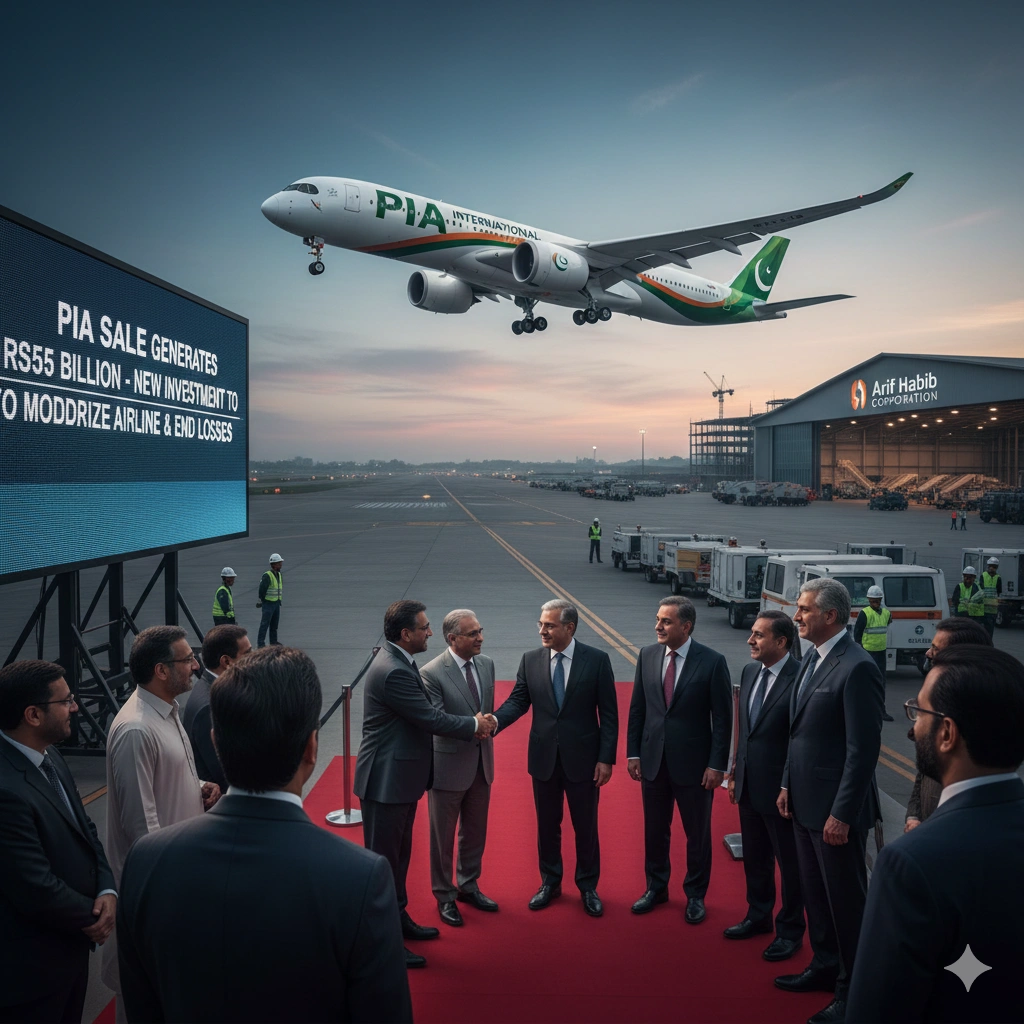
The government of Pakistan has announced the sale of 75% of Pakistan International Airlines (PIA) to a consortium led by the Arif Habib Corporation. Officials project that this privatization will generate Rs55 billion in economic value and provide much-needed financial stability for the airline.
This sale marks a major step toward modernizing PIA and tackling the decade-long operational losses totaling approximately Rs500 billion. Aviation experts see this as a transformative move for Pakistan’s national carrier and the broader aviation sector.
Record-Breaking Bid and Financial Structure
The winning bid of Rs135 billion surpasses the government’s minimum base price, valuing PIA at Rs180 billion. Adviser to the Prime Minister on Privatisation, Muhammad Ali, and Information Minister Attaullah Tarar explained the financial structure:
- 7.5% of the proceeds will go directly to the government.
- 92.5% will be reinvested into the airline as new equity.
- The airline’s properties are not included in the deal.
- No long-term debt is transferred, giving the consortium a clean financial slate.
This bid by the Arif Habib-led consortium represents one of the largest privatization deals in Pakistan’s aviation history. It not only reflects strong investor confidence but also provides the airline with the resources needed to overcome past inefficiencies. Analysts suggest that such strategic investment could stabilize Pakistan International Airlines and set a benchmark for future privatization initiatives in the country.
Modernization and Operational Expansion
Currently, PIA operates 19 out of 33 aircraft, serving 30 destinations with landing rights in 78 countries. The privatization plan includes government incentives, such as GST exemptions, to support smoother operations and investment inflow.
The Arif Habib-led consortium intends to implement advanced aviation technology, enhance passenger experience, and improve overall operational efficiency. With fresh capital, the airline can accelerate fleet modernization, expand domestic and international routes, and optimize schedules for profitability.
The modernization plan includes the introduction of fuel-efficient aircraft, digital ticketing systems, and improved customer service facilities at major airports. With these upgrades, Pakistan International Airlines aims to reduce operational costs, enhance passenger convenience, and offer faster, more frequent domestic and international flights.
Key Benefits of Pakistan International Airlines Privatization
- Financial Relief: New equity reduces the government’s fiscal burden.
- Operational Efficiency: Modern aircraft and technology cut recurring losses.
- Global Competitiveness: Expanded destinations and upgraded services enhance international standing.
- Investor Confidence: Transparent, structured deal encourages further private investment in Pakistan’s aviation sector.
Beyond immediate financial relief, the privatization of Pakistan International Airlines is expected to generate new employment opportunities within the airline and across related sectors, including tourism, airport services, and aviation maintenance. These improvements could contribute significantly to the overall growth of Pakistan’s aviation industry.
Long-Term Outlook for PIA
The privatization of PIA is expected to usher in a new era of profitability and efficiency. Analysts anticipate that the airline can achieve positive financial performance within a few years. The consortium aims to implement comprehensive management reforms, improve passenger services, and adopt global aviation standards.
For travelers, this translates into enhanced flight schedules, better onboard services, and a reliable airline experience. For the government, it means reduced financial liabilities and increased economic activity. This move also strengthens Pakistan’s investment landscape, signaling the country’s readiness for structured, transparent partnerships with private investors, paving the way for sustainable development in the aviation sector.
In the long term, adopting international aviation standards will help Pakistan International Airlines enhance its global reputation, attract more international passengers, and implement environmentally sustainable practices. Experts believe that a modernized airline could also strengthen Pakistan’s position in regional and global air travel markets.
For more details & sources visit: Business Recorder
For the latest updates from Pakistan, visit our Pakistan news page.