
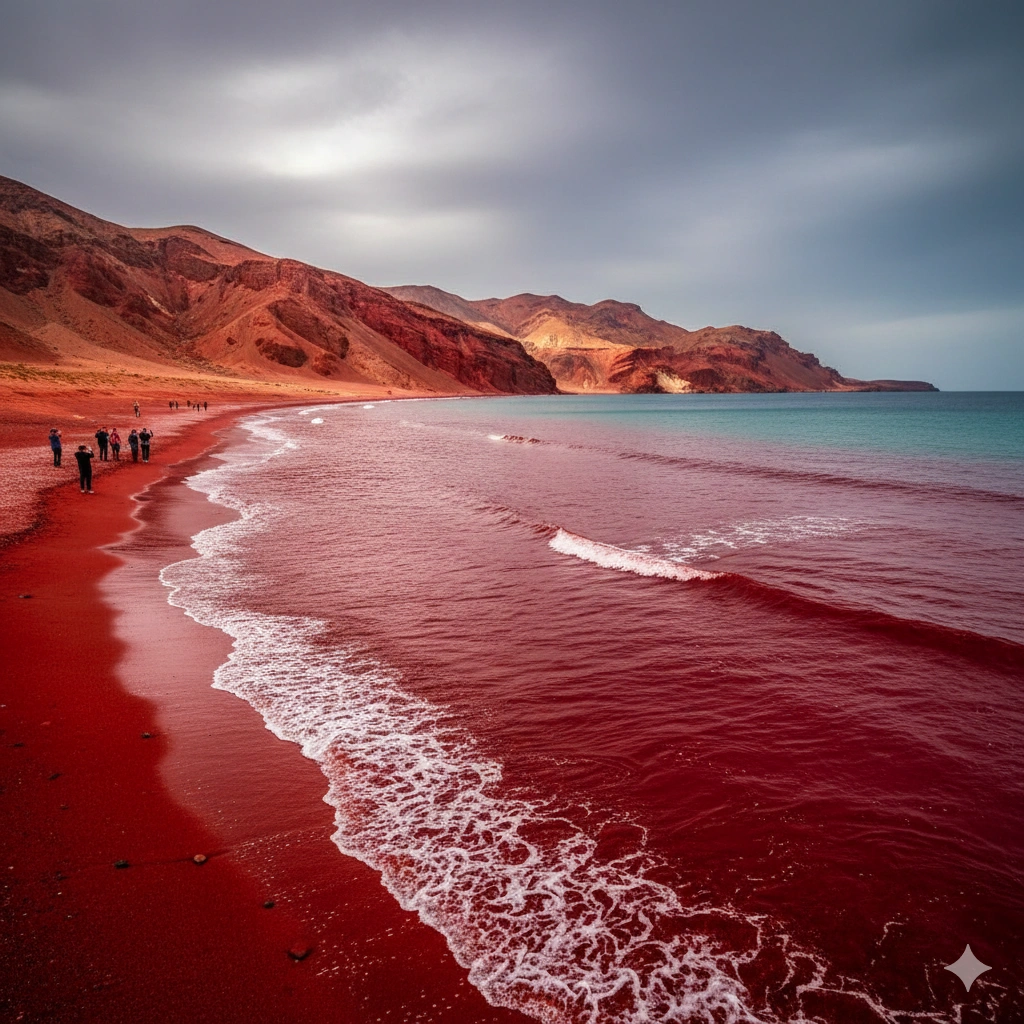
Iran’s Hormuz Island has captured global attention after heavy seasonal rains transformed its shoreline into a dramatic blood-red landscape, creating one of the most visually striking natural spectacles seen in recent years. Images and videos of the phenomenon spread rapidly across international media and social platforms, leaving audiences both amazed and bewildered.
Often referred to as “Rainbow Island” for its naturally colorful terrain, Iran’s Hormuz Island is no stranger to geological wonder. However, the sudden and intense red coloration of its beaches following rainfall elevated the island into the global spotlight, prompting curiosity about the science behind the phenomenon and renewed interest in the island’s unique natural makeup.
What Caused Iran’s Hormuz Island to Turn Red?
The dramatic transformation of Iran’s Hormuz Island occurred after heavy rainfall swept across the region earlier this week. According to geological experts and local reports, the phenomenon is entirely natural and linked to the island’s unusually high concentration of iron oxide and other minerals in its soil.
When rainwater flows over Hormuz Island’s mineral-rich hills, it dissolves fine particles of red ochre—locally known as gelack—and carries them downhill into the sea. As the runoff mixes with seawater along the shore, the coastline takes on a deep crimson hue, creating the illusion of blood-red waves washing onto the beach.
This rare interaction between rainfall, soil composition, and tidal movement is what makes the event both visually dramatic and scientifically fascinating.
Why Hormuz Island Is Known as “Rainbow Island”
Iran’s Hormuz Island sits at the mouth of the Persian Gulf and is famous for its extraordinary geological diversity. Despite its small size, the island contains more than 70 different minerals, resulting in hills and valleys colored red, yellow, orange, white, and purple.
Key geological features include:
- Iron-rich red soil used in local cuisine and art
- Salt domes formed over millions of years
- Volcanic rock layers exposed by erosion
This mineral richness explains why Iran’s Hormuz Island regularly attracts geologists, photographers, and eco-tourists even outside rare events like the red shoreline phenomenon.
Global Media Reaction and Viral Attention
The blood-red beaches of Iran’s Hormuz Island quickly drew coverage from international outlets. Western media described the event in dramatic terms, with some headlines referring to a “rain of blood” or a “crimson tide” reshaping the coast overnight.
Social media platforms amplified the spectacle:
- Drone footage showcased red streams flowing into the turquoise Persian Gulf
- Photographers shared side-by-side contrasts of before-and-after shoreline images
- Nature enthusiasts praised the event as a reminder of Earth’s raw beauty
The stark contrast between the red shoreline and the blue waters of the Persian Gulf proved particularly captivating, turning the island into a viral sensation within hours.
Is the Red Water Dangerous?
Despite its alarming appearance, experts confirm that the phenomenon on Iran’s Hormuz Island is not harmful to humans or marine life. The coloration results from naturally occurring minerals rather than pollution or chemical contamination.
In fact, the red soil of Hormuz Island has long been used safely in:
- Traditional cooking
- Natural dyes and cosmetics
- Local handicrafts
Authorities and environmental observers emphasized that the event poses no ecological threat and should be viewed as a temporary, natural occurrence linked to weather patterns.
A Boost for Tourism and Environmental Awareness
The sudden global attention on Iran’s Hormuz Island is expected to boost interest in the region’s eco-tourism potential. Already known as a destination for geological tourism, the island may see increased interest from international travelers seeking rare natural experiences.
Local officials and environmental advocates hope the viral attention will:
- Encourage sustainable tourism
- Promote conservation of fragile coastal ecosystems
- Increase awareness of Iran’s lesser-known natural landmarks
However, experts also caution that increased foot traffic must be carefully managed to protect the island’s delicate terrain.
Why Iran’s Hormuz Island Continues to Fascinate
The blood-red shoreline event underscores why Iran’s Hormuz Island remains one of the Middle East’s most visually unique natural locations. Few places on Earth offer such dramatic demonstrations of geology, climate, and color in real time.
From its mineral-rich soil to its sudden transformations after rainfall, the island serves as a reminder that nature still holds the power to surprise—even in an age dominated by technology and urban landscapes.