
Recent hospital data indicate that Canada birth tourism is seeing a modest uptick, even as the number of temporary residents declines. The trend has reignited discussions about citizenship policies, healthcare costs, and immigration strategies in the country.
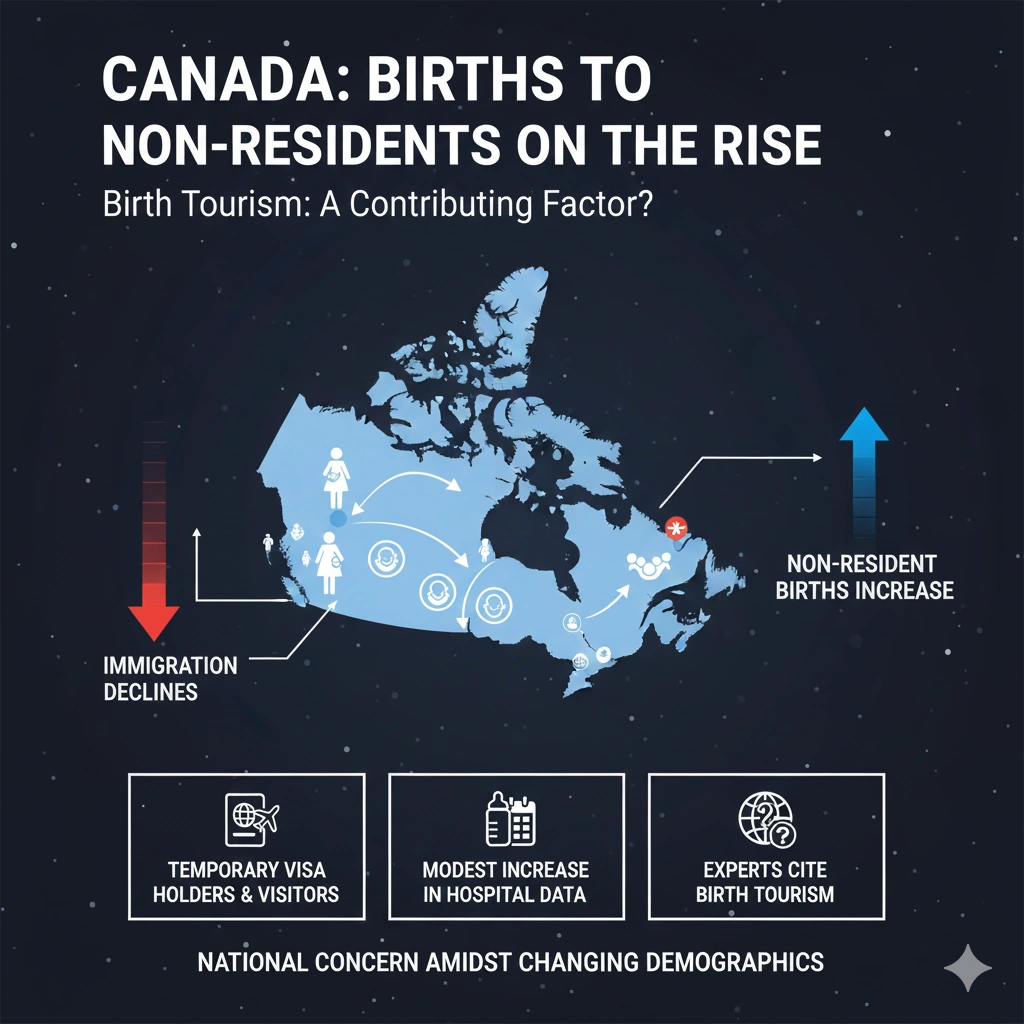
According to a report compiled by former federal immigration official Andrew Griffith, births to non-residents—including visitors, temporary workers, and international students—rose by approximately 4% in the 2024–25 fiscal year. Although overall numbers remain relatively small, they are approaching pre-pandemic levels, suggesting a resurgence of birth tourism activity.
Understanding the Rise in Canada Birth Tourism
Experts attribute the increase in births to foreign visitors to several factors:
- Attraction of Automatic Citizenship: Canada grants birthright citizenship to any child born on its soil, making it a destination for families seeking Canadian citizenship for their children.
- Healthcare Access: Canada’s public healthcare system provides high-quality maternal and neonatal care, attracting foreign mothers who are willing to cover medical costs privately.
- Stable Political and Social Environment: The country’s safety, education system, and social services make it an appealing destination for birth tourism.
Despite the rise in births to non-residents, Canada’s overall temporary resident population has decreased, particularly among international students and temporary foreign workers. This divergence highlights how birth tourism can persist independently of general immigration trends.
Policy Debate Surrounding Birth Tourism
The resurgence of Canada birth tourism has sparked debate among policymakers and the public. Key points include:
- Citizenship Policy: Critics argue that automatic citizenship for children of temporary visitors may be exploited, while proponents emphasize the principle of jus soli as part of Canada’s inclusive identity.
- Healthcare Costs: Hospitals and provincial health systems may face additional financial pressures due to privately funded non-resident births, though the impact remains limited at present.
- Regulatory Measures: Some experts suggest stricter visa requirements, enhanced reporting, or targeted taxation to manage the rise in birth tourism.
Griffith’s report has reignited conversations about balancing Canada’s welcoming immigration policies with the potential challenges of unregulated birth tourism.
Looking Ahead
While the increase in Canada birth tourism is modest, it may have implications for healthcare planning, immigration policy, and public perception. Analysts recommend ongoing monitoring and policy review to ensure that the system continues to serve both residents and non-residents equitably.
As Canada continues to manage temporary resident numbers amid global migration pressures, the trend of foreign visitors giving birth on Canadian soil is expected to remain a point of discussion in political and social arenas.
Source: The Globe and Mail
For more updates and related stories, visit our Canada News page.