
Russia has released its annual Ukraine conflict review, presenting claimed battlefield gains and outlining strategic priorities for the coming year. The report, issued by the Defense Ministry, underscores Moscow’s efforts to project strength as the war approaches its fourth year, while also signaling future military objectives.
The Russia Ukraine conflict review provides insight into Kremlin messaging, military planning, and ongoing attempts to influence negotiations over Ukraine’s future.
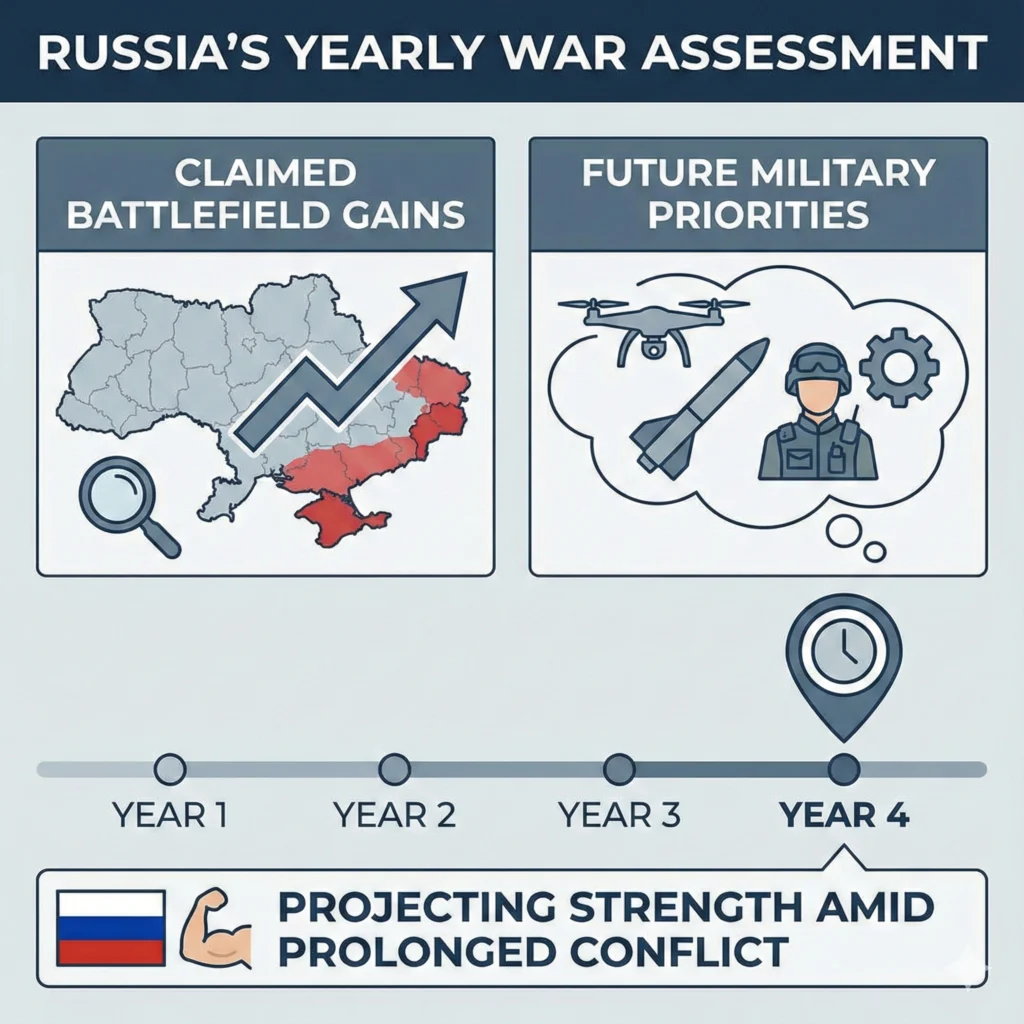
Key Highlights from the Review
During an expanded Defense Ministry Board meeting in Moscow, Defense Minister Andrei Belousov detailed official figures regarding Russian operations in Ukraine. President Vladimir Putin addressed generals, asserting that Russian forces were achieving battlefield momentum and overwhelming Ukrainian troops.
While these claims cannot be independently verified and differ from assessments by Western intelligence and international observers, the review revealed:
- Russia’s emphasis on drone defense and counter-drone operations
- Claimed territorial consolidation in specific operational zones
- Plans to strengthen logistical and artillery capabilities
- Strategic focus on maintaining pressure in contested regions
The presentation reflects a combination of military reporting and political signaling aimed at domestic and international audiences.
Strategic Implications of Moscow’s Assessment
Analysts interpret the Russia Ukraine conflict review as a tool to shape perception both at home and abroad:
- Domestic Messaging: Reinforces a narrative of Russian resilience, demonstrating control over the military situation and justifying ongoing mobilization and resources.
- International Signaling: Positions Russia as a strong negotiating party amid talks over potential concessions or ceasefire arrangements with Ukraine.
- Operational Forecasting: Highlights Russia’s intent to maintain pressure in key regions, upgrade military technology, and pursue tactical advantages in contested territories.
By framing the review around success and strategic planning, Moscow seeks to bolster credibility despite ongoing battlefield challenges.
Context and Global Reactions
The Russia Ukraine conflict review comes amid increasing international scrutiny and continued diplomatic efforts to end hostilities. Western governments and independent observers note that reported figures often contrast sharply with on-the-ground assessments in Ukraine.
Despite this, Russia’s briefing serves multiple functions: it reassures military and political leadership internally, provides talking points for state media, and seeks to influence both regional and global perceptions of the conflict. Analysts caution that the review is as much about perception management as operational transparency.
Looking Ahead
As the war in Ukraine nears its fourth year, the Russia Ukraine conflict review suggests that Moscow will continue pursuing both military objectives and strategic messaging campaigns. Key areas to watch include:
- Expansion of drone defense capabilities
- Adjustments in artillery and logistics deployments
- Negotiation strategies in potential peace talks
- Coordination with allied and proxy forces
The annual review underscores that Russia intends to maintain pressure while projecting confidence, shaping expectations for both domestic audiences and international stakeholders.
Source: Business Insider
For more regional updates and industry insights, visit our Russia News Page.