
The Japan Lower House seat reduction is poised to reshape parliamentary representation, as a draft bill proposes cutting 10% of the House of Representatives seats. The proposed reduction would impact both constituency and proportional representation seats, potentially affecting single-seat districts across 20 prefectures, including major population centers such as Tokyo, Osaka, Gunma, and Nagano.
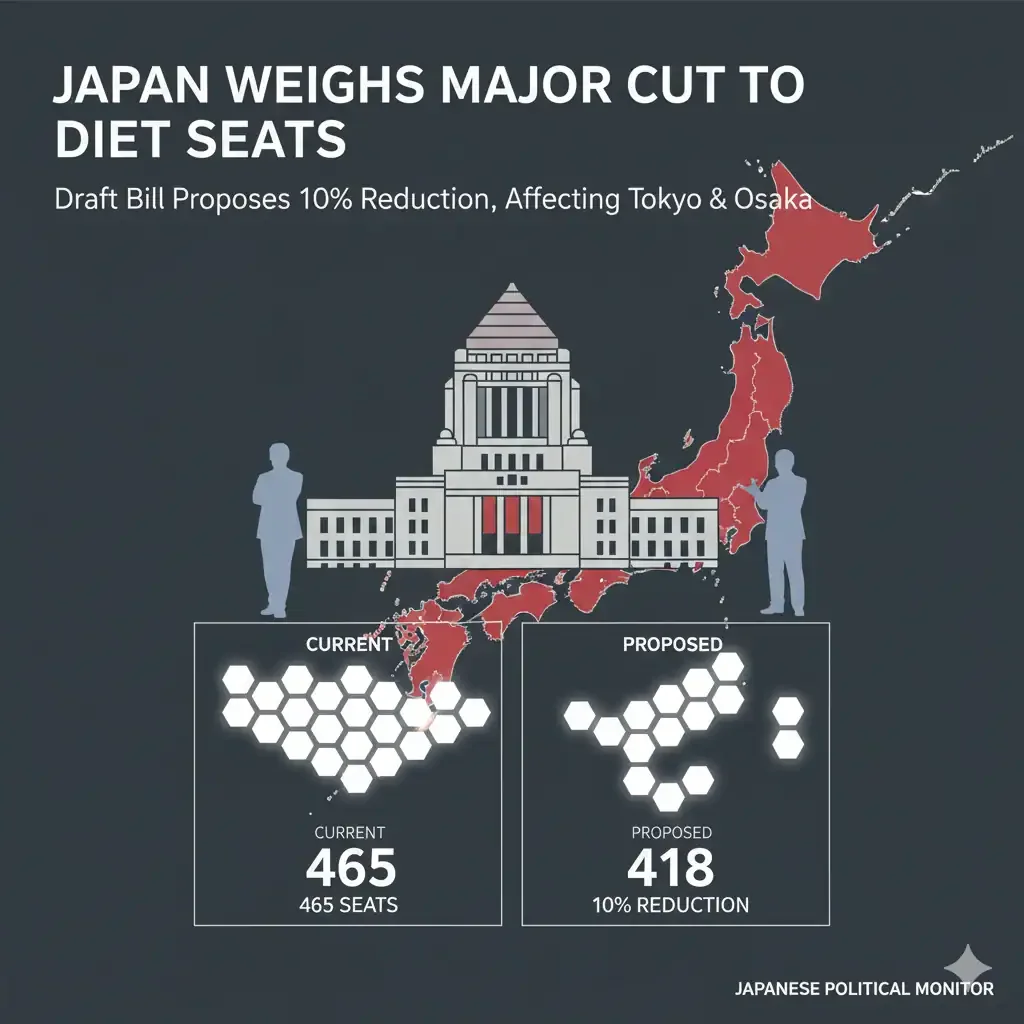
The current House of Representatives comprises 465 seats, with 289 constituency seats and 176 proportional representation seats. Under the draft bill, both types of seats would be reduced to reflect demographic shifts and streamline parliamentary operations. The ruling Liberal Democratic Party (LDP) has emphasized that the legislation is designed to ensure fair and efficient representation while adapting to Japan’s changing population distribution.
According to LDP estimates, if cross-party negotiations stall, the legislation would trigger cuts affecting districts in 20 of Japan’s 47 prefectures. This includes areas with high population density such as Tokyo and Osaka, where electoral competition is particularly intense. Analysts suggest that reducing seats in these regions could significantly influence future electoral outcomes and party strategies.
The draft bill also includes a potential automatic trigger clause. If ruling–opposition talks fail within one year of enactment, 25 single-seat districts and 20 proportional representation seats would be cut automatically. The mechanism is intended to pressure political parties into reaching a consensus while ensuring that the seat reduction proceeds regardless of negotiation outcomes. This clause has sparked debate among lawmakers, as it introduces a non-negotiable enforcement mechanism that could bypass traditional legislative compromise.
Supporters of the Japan Lower House seat reduction argue that the move will improve efficiency and reduce government expenditure while better aligning parliamentary representation with demographic realities. Japan’s aging population and declining birth rates have resulted in significant population imbalances among districts, with some rural constituencies overrepresented relative to urban centers. By reducing the total number of seats, policymakers aim to address these disparities and maintain equitable representation.
Critics, however, warn that the proposed cuts could disrupt local political dynamics and reduce the influence of certain prefectures in national policymaking. Smaller constituencies may face diminished representation, and political parties may need to recalibrate campaign strategies to address the new electoral map. Public consultations and cross-party dialogue will be crucial in shaping the final version of the bill.
The LDP and coalition partner Nippon Ishin no Kai have indicated that demographic trends, cost-efficiency considerations, and international best practices guided the formulation of the proposal. Both parties are engaging in talks with opposition lawmakers to finalize seat allocation and ensure broad political support. Failure to reach consensus could activate the automatic trigger, making the reduction law effective regardless of opposition agreement.
Overall, the Japan Lower House seat reduction represents a significant reform in the country’s parliamentary system. By adjusting representation to reflect population changes and introducing measures to ensure enforcement, the legislation aims to balance fairness, efficiency, and political accountability. Observers note that the outcome of these reforms will likely shape Japan’s electoral landscape for decades, influencing party strategies, voter engagement, and legislative dynamics.
As debates continue, attention will focus on which prefectures will see the most significant seat reductions, how parties adapt to the changes, and the potential implications for upcoming elections. The bill underscores the government’s commitment to modernizing Japan’s political system while addressing demographic and fiscal challenges.
For the latest updates from Japan, visit our Japan news page.