
Japan calls for economic self-reliance as the ruling Liberal Democratic Party (LDP) emphasizes reducing the nation’s dependence on China. The push comes after Prime Minister Sanae Takaichi’s remarks regarding Taiwan sparked tensions with Beijing, highlighting vulnerabilities in Japan’s economic and geopolitical landscape.
LDP policy chief Takayuki Kobayashi stressed the importance of building a self-reliant economic structure during a televised program aired by public broadcaster NHK on 30 November 2025. He urged policymakers to take a calm, strategic approach when addressing Chinese pressure, noting that hasty reactions or politically motivated statements could exacerbate divisions both among lawmakers and the public.
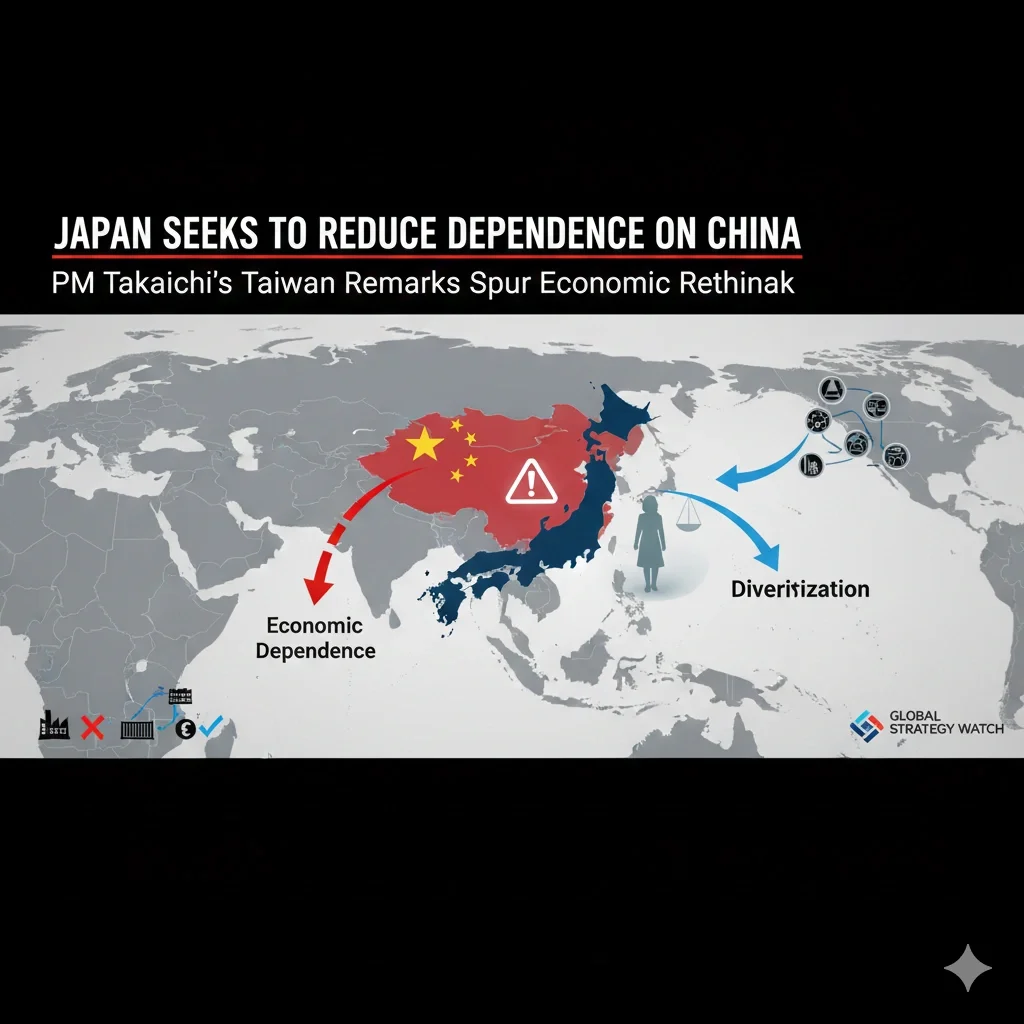
Strategic Rationale for Self-Reliance
Japan calls for economic self-reliance to mitigate risks associated with heavy dependence on China for trade, manufacturing inputs, and critical technologies. The LDP argues that diversifying supply chains, strengthening domestic production, and enhancing innovation capacity are essential for national security and economic stability. Kobayashi highlighted that Japan must carefully assess who benefits from public discord or policy missteps, emphasizing measured responses over populist rhetoric.
Diversification and Domestic Strengthening
Officials suggest several strategies to achieve economic resilience:
- Supply Chain Diversification: Encouraging businesses to source critical components from multiple countries to avoid over-reliance on a single partner.
- Domestic Industrial Investment: Expanding Japan’s manufacturing and technology sectors to reduce import dependency.
- Strategic Partnerships: Forming economic alliances with other regional and global partners to enhance trade flexibility and market access.
- Innovation and Research: Investing in emerging technologies, including semiconductors, green energy, and AI, to maintain global competitiveness.
Implications for Japan-China Relations
The call for self-reliance comes amid heightened sensitivities in Tokyo-Beijing relations following Takaichi’s Taiwan remarks. Analysts note that reducing economic dependence could strengthen Japan’s negotiating position, enabling the country to respond more effectively to diplomatic pressure. At the same time, careful management of bilateral trade ties is essential to prevent unnecessary escalation or disruption of supply chains critical to Japan’s economy.
Broader Economic and Geopolitical Impact
Japan’s strategic push is aligned with global trends toward economic resilience and security-conscious trade policies. By prioritizing domestic strengthening and diversification, Tokyo aims to safeguard economic growth, technological advancement, and national security. Experts note that similar strategies are being pursued by other nations seeking to reduce reliance on single economic powers, particularly in sensitive industries such as technology, energy, and rare materials.
Looking Ahead
Japan calls for economic self-reliance to ensure long-term stability and resilience amid an evolving geopolitical landscape. By implementing measured policies and strategic initiatives, the nation seeks to protect its economic interests while maintaining regional peace and stability. LDP leaders emphasize that these measures are not intended to provoke conflict but to secure Japan’s economic future in a complex international environment.
Source: Japan Times
For more China-related updates, visit our China News page