
The Canada real estate market continues to demonstrate notable resilience in 2025, even as national benchmark prices show signs of cooling. While overall price growth has slowed, many of the country’s most desirable cities—particularly coastal, tech-driven, and heritage-rich hubs—remain highly competitive. These regions continue to attract steady interest from homebuyers and investors who prioritize lifestyle advantages, job opportunities, and long-term property value.
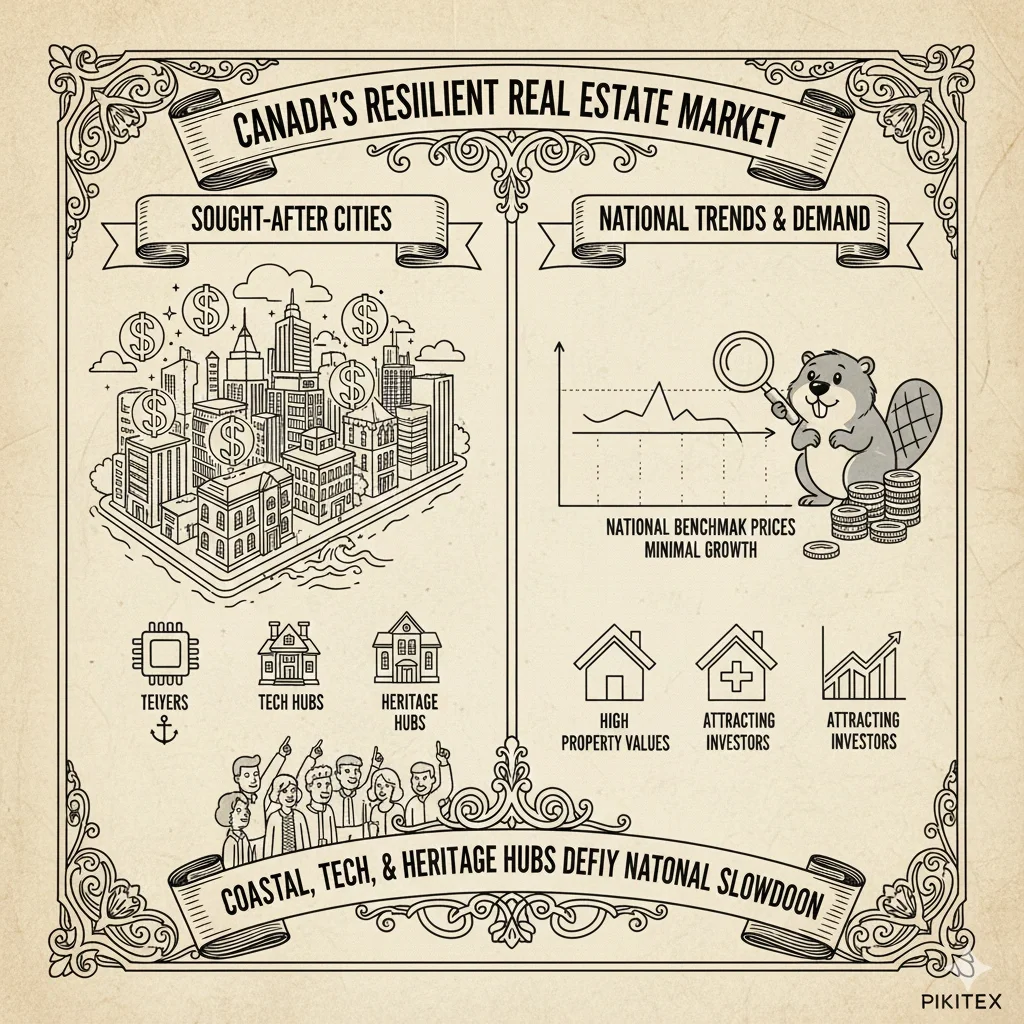
Benchmark housing prices across Canada increased only 0.2% month-over-month in October 2025, indicating a moderation after several years of strong appreciation. Analysts note that this slowdown does not necessarily reflect declining demand, but rather a stabilization following periods of rapid market acceleration. At the same time, localized pockets of strong performance reveal that consumer preferences remain heavily influenced by geography, culture, and economic opportunity.
Coastal and Lifestyle Hubs Remain Strong
Coastal cities continue to outperform national averages due to their unique blend of scenery, climate, and lifestyle appeal. Markets like Vancouver, Victoria, and select Atlantic communities remain highly sought-after, driven by both local buyers and investors seeking long-term stability. Waterfront access, favorable climates, and tourism-driven economies contribute to sustained demand despite higher price points.
Tech Corridors Draw Younger Buyers and Talent
Emerging and established tech hubs— including Waterloo Region, Ottawa, and parts of Montreal—are experiencing ongoing buyer interest. These cities benefit from strong job markets, expanding tech ecosystems, and an influx of young professionals seeking a balance between affordability and quality of life. While prices in these regions also remain elevated, they often offer greater value relative to Canada’s largest metros.
Heritage-Rich and Culturally Distinct Cities See Persistent Attraction
Cities with strong cultural identities, historic architecture, and thriving arts communities have also maintained high property values. Locations such as Quebec City, Halifax, and Victoria blend heritage charm with urban convenience, making them attractive to both retirees and young families.
More Affordable Alternatives in Mid-Sized Cities
While major centers like Toronto and Vancouver remain expensive, smaller and mid-sized cities provide more accessible entry points into the Canada real estate market. Areas with growing infrastructure, improving transit links, and expanding job sectors offer buyers a chance to secure properties at comparatively moderate prices. Analysts note that affordability varies greatly based on neighborhood, property type, and municipal economic conditions.
Local Factors Drive Pricing and Accessibility
Affordability is increasingly influenced by factors such as proximity to transit, local job growth, redevelopment efforts, and housing supply. Even within costly markets, some neighborhoods remain more accessible due to older housing stock or distance from major employment hubs. Conversely, newly developed urban cores and luxury condo zones continue to push prices upward.
High Prices Do Not Always Equal Stability
Experts caution that high real estate prices do not guarantee market stability or accessibility. In some regions, demand fluctuates based on economic shifts, supply constraints, or changes in investor behavior. Rising interest rates and increased borrowing costs are contributing to slower national price growth, affecting buyer sentiment and reducing speculative activity.
Canadians Continue Prioritizing Lifestyle and Long-Term Value
Despite cooling national benchmarks, the data reflects a broader trend: Canadians remain committed to living in cities that offer meaningful cultural, economic, and lifestyle advantages. Whether driven by natural landscapes, booming tech sectors, or historical character, these preferences continue to shape where buyers invest and where demand remains strongest in the Canada real estate market.
Source: Yahoo Finance
For more updates and related stories, visit our Canada News page.