
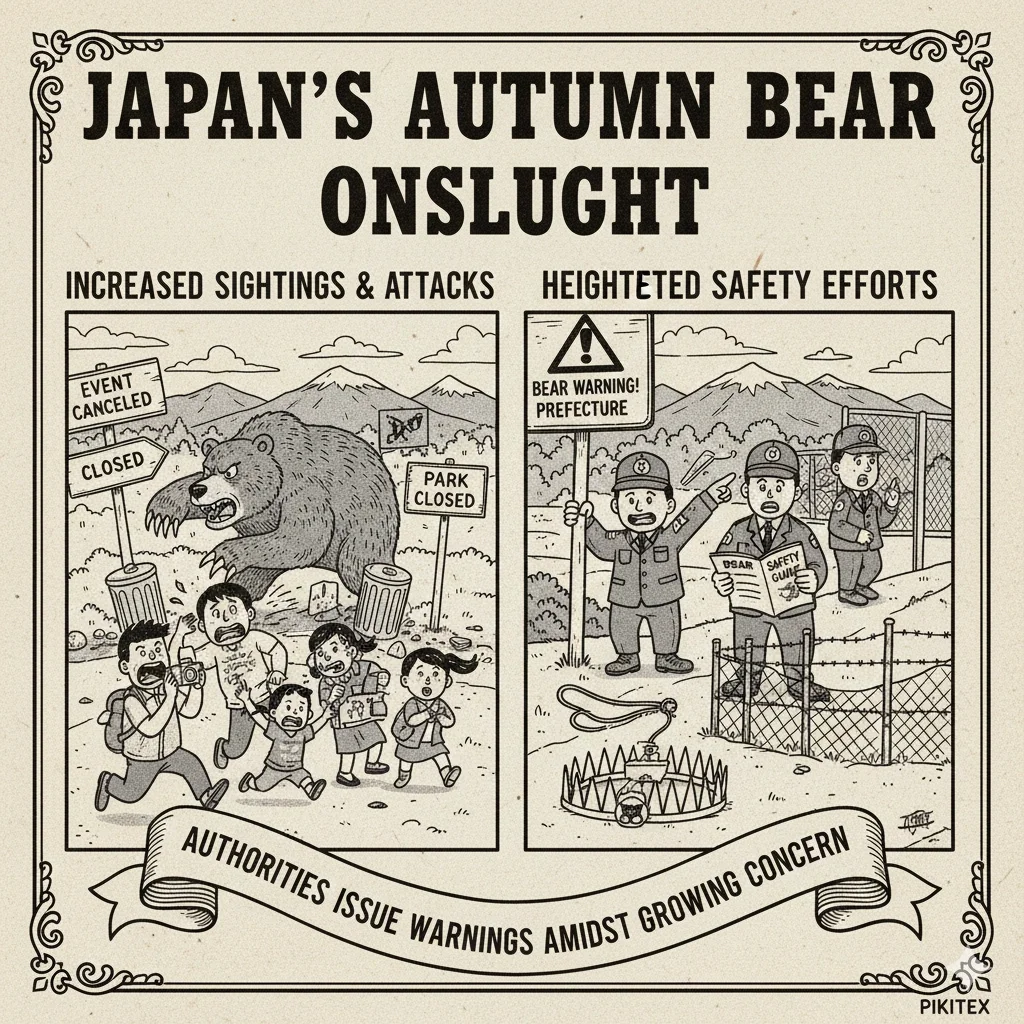
Japan bear attacks 2025 have sharply increased this autumn, triggering widespread safety concerns, event cancellations, and stringent measures across several prefectures. Local governments, tourism authorities, and police forces are intensifying patrols and issuing multilingual warnings as the number of encounters continues to rise. The spike in bear activity is impacting tourism, disrupting local events, and pressuring authorities to implement aggressive prevention strategies.
Miyagi Declares First-Ever Bear Sighting Emergency in Naruko Gorge
In Miyagi Prefecture’s Osaki city, the iconic Naruko Gorge—a top autumn foliage destination—has experienced repeated bear sightings over recent weeks. For the first time in its history, the city issued a “bear sighting emergency declaration.”
Tourist numbers have fallen sharply, and hotels report growing cancellations as travelers avoid the area. In response, local tourism officials urge visitors to:
- Avoid walking alone
- Travel in groups
- Stay alert on forest paths
- Adhere to police instructions
Police patrols now use loudspeakers broadcasting in four languages—Japanese, English, Chinese, and Korean—to warn visitors and instruct them on staying safe. Authorities continue to monitor trails and implement real-time advisories as sightings persist.
Fukushima Distributes Bear Bells and Multilingual Safety Pamphlets
In Fukushima Prefecture’s scenic Urabandai region, authorities have launched a comprehensive awareness campaign to protect hikers, tourists, and residents. Measures include:
- Distributing bear bells to help deter animals
- Posting warning signs in Japanese and English
- Handing out safety pamphlets explaining bear behavior and emergency steps
- Increasing ranger and police presence around major trailheads
With autumn drawing large numbers of visitors, officials emphasize that even popular recreational areas require heightened caution this season.
Akita Records 54 Bear Attacks Since April, Forces Military Involvement
Akita Prefecture faces the severest bear-related crisis in the country, with 54 attacks recorded since April—one of the highest tallies on record. The situation has grown serious enough that the Ground Self-Defense Force (GSDF) was deployed to assist in capturing aggressive bears in urban areas.
Akita City’s Senshu Park has become a focal point of concern. After multiple sightings, the park temporarily closed, then reopened once two bears were captured. However, fresh sightings forced another shutdown, demonstrating the ongoing unpredictability of wildlife activity.
Local authorities warn that food scarcity in surrounding mountains may be driving bears closer to populated areas in search of nourishment.
Shirakawa-go Cancels Autumn Light-Up Event Amid Safety Fears
In Gifu Prefecture, the UNESCO World Heritage village of Shirakawa-go canceled its highly anticipated autumn light-up event due to increasing bear activity. The decision disappointed thousands of expected visitors but underscored the seriousness of the regional situation.
Officials explained that ensuring public safety took precedence, particularly given the event’s traditionally heavy nighttime foot traffic—a high-risk period for wildlife encounters.
Nationwide Precautions Intensify as Japan Bears Become More Active
The rise in Japan bear attacks 2025 mirrors broader wildlife trends influenced by climate shifts, food-chain disruptions, and urban expansion. Across affected prefectures, authorities recommend:
- Carrying bells or noisemakers
- Avoiding dusk and dawn hikes
- Sticking to marked trails
- Traveling in groups
- Reporting sightings immediately
Authorities also urge residents to secure garbage and outdoor food sources to reduce the likelihood of bears entering towns.
Tourism Impact and Safety Outlook
The surge in sightings and attacks has already impacted Japan’s autumn tourism season—typically one of the busiest travel periods. Hotels in Miyagi, Gifu, and Akita note increased cancellations, while parks and trails are implementing stricter access rules.
Officials across Japan stress that the situation remains manageable with proper precautions, and local governments continue to refine communication strategies, patrol routes, and emergency response plans.
As Japan balances preserving tourism appeal with ensuring public safety, Japan bear attacks 2025 remain a top concern heading into the winter season.