
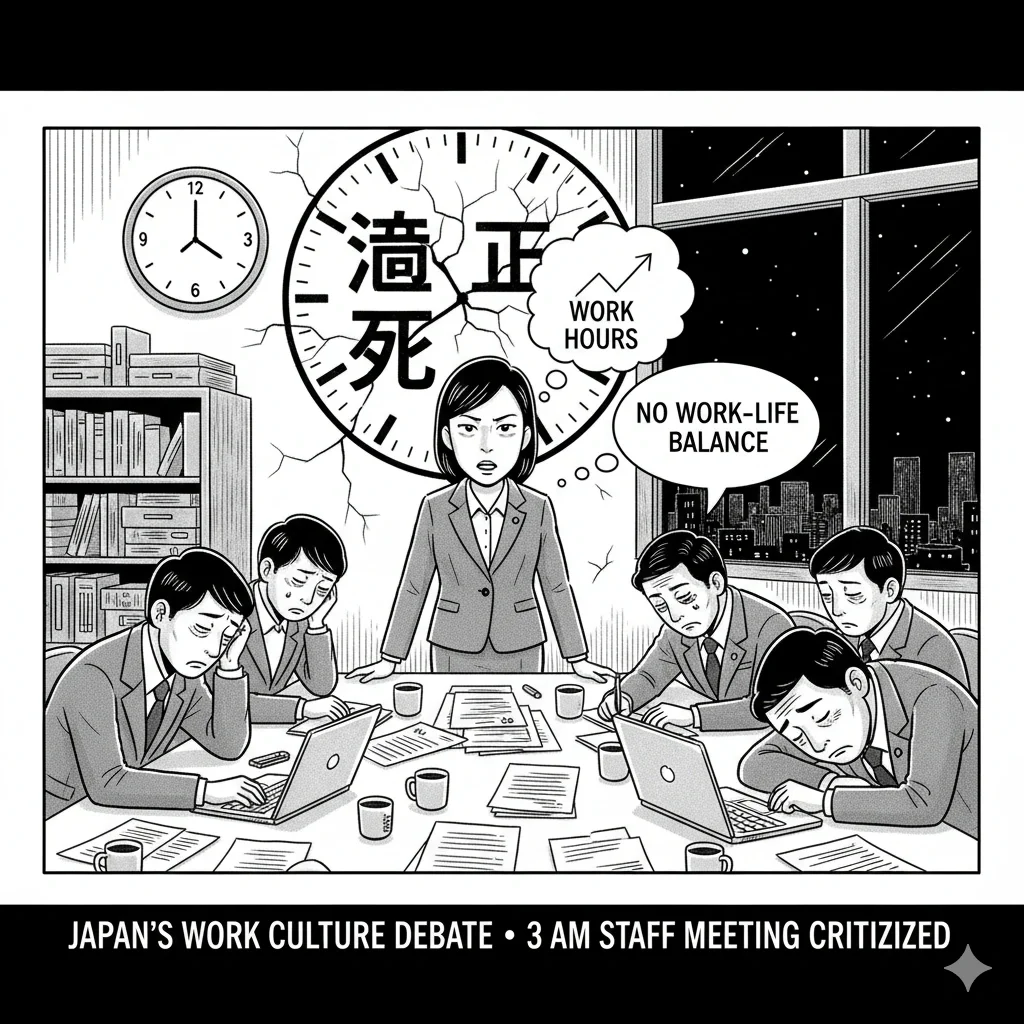
A Japan PM Takaichi 3 a.m. meeting with staff has ignited national debate after the newly appointed Prime Minister, Sanae Takaichi, convened an early-morning strategy session ahead of a parliamentary appearance. The gathering, held at 3 a.m. and lasting nearly three hours, has drawn both criticism and praise amid growing concerns over excessive working hours and Japan’s ongoing struggle with karōshi, or “death from overwork.”
Prime Minister Takaichi, who is widely known for her intense work ethic and skepticism of conventional work-life boundaries, left her Tokyo residence before dawn to meet advisers for what Japanese media have labeled the “3 a.m. study session.” The incident immediately went viral across domestic news platforms and social media, sparking conversations about leadership, responsibility, and the sustainability of Japan’s demanding work culture.
A Leadership Style Under Scrutiny
Supporters of the Prime Minister argue that the Japan PM Takaichi 3 a.m. meeting showcases her deep commitment to government preparation. Her allies emphasize that the early-morning briefing demonstrates discipline and urgency at a time when Japan faces significant policy challenges, from economic recovery to geopolitical tensions. According to these supporters, the Prime Minister’s hands-on approach reflects seriousness and efficiency — traits they believe are critical in high-pressure political environments.
However, critics warn that such behavior risks setting a dangerous precedent for civil servants and government staff. Japan’s professional culture has long been associated with long working hours, limited vacation time, and the expectation of unwavering dedication to one’s employer — even at the cost of personal health. The optics of a national leader calling staff to work at 3 a.m. have therefore heightened concerns that public workers may feel pressured to match her pace, regardless of personal cost.
The Shadow of Karōshi
Japan’s battle with karōshi adds further tension to the debate. The term, which translates to “death from overwork,” encompasses fatal heart attacks, strokes, and suicides attributed to extreme fatigue and job-related stress. Despite government reforms and increased public awareness, instances of karōshi continue to occur, especially in high-pressure industries such as finance, media, and government.
In this context, the 3 a.m. meeting has drawn criticism from labor advocates and work-reform activists, who argue that leadership must model healthier practices. They assert that the Prime Minister’s decision contradicts ongoing national efforts to encourage companies and institutions to reduce extreme work schedules.
Supporters Praise Discipline; Critics Fear Normalization of Overwork
The debate has polarized public opinion. Admirers of Takaichi’s determination highlight her proactive approach, arguing that successful governance requires sacrifice, flexibility, and readiness to work around the clock when necessary. They add that extraordinary circumstances sometimes justify extraordinary schedules.
Detractors counter that the Japan PM Takaichi 3 a.m. meeting risks normalizing expectations that staff — many of whom already manage heavy workloads — must be perpetually available. They emphasize that leadership should balance dedication with ethical responsibility toward employee well-being.
A Broader Conversation on Work-Life Reform
Japan has spent years attempting to reform its rigid workplace culture. Efforts have included limits on overtime hours, mandatory leave systems, and public campaigns encouraging healthier work-life balance. Yet cultural norms, managerial expectations, and longstanding professional traditions continue to hinder progress.
The early-morning session triggered renewed calls for leaders to exemplify the reforms they expect society to adopt. Sociologists and labor specialists point out that political leaders wield symbolic influence, and their work habits often cascade into organizational behavior at all levels of government.
What Happens Next?
The controversy is likely to remain a focal point in discussions about Japan’s modern work environment. As Prime Minister Takaichi continues her tenure, analysts expect closer examination of her leadership style, especially regarding internal staff management and expectations.
While the Prime Minister’s dedication is seen by some as admirable, the Japan PM Takaichi 3 a.m. meeting has undeniably revived critical conversations about workplace health, labor rights, and the evolving definition of professional commitment in Japanese society.