
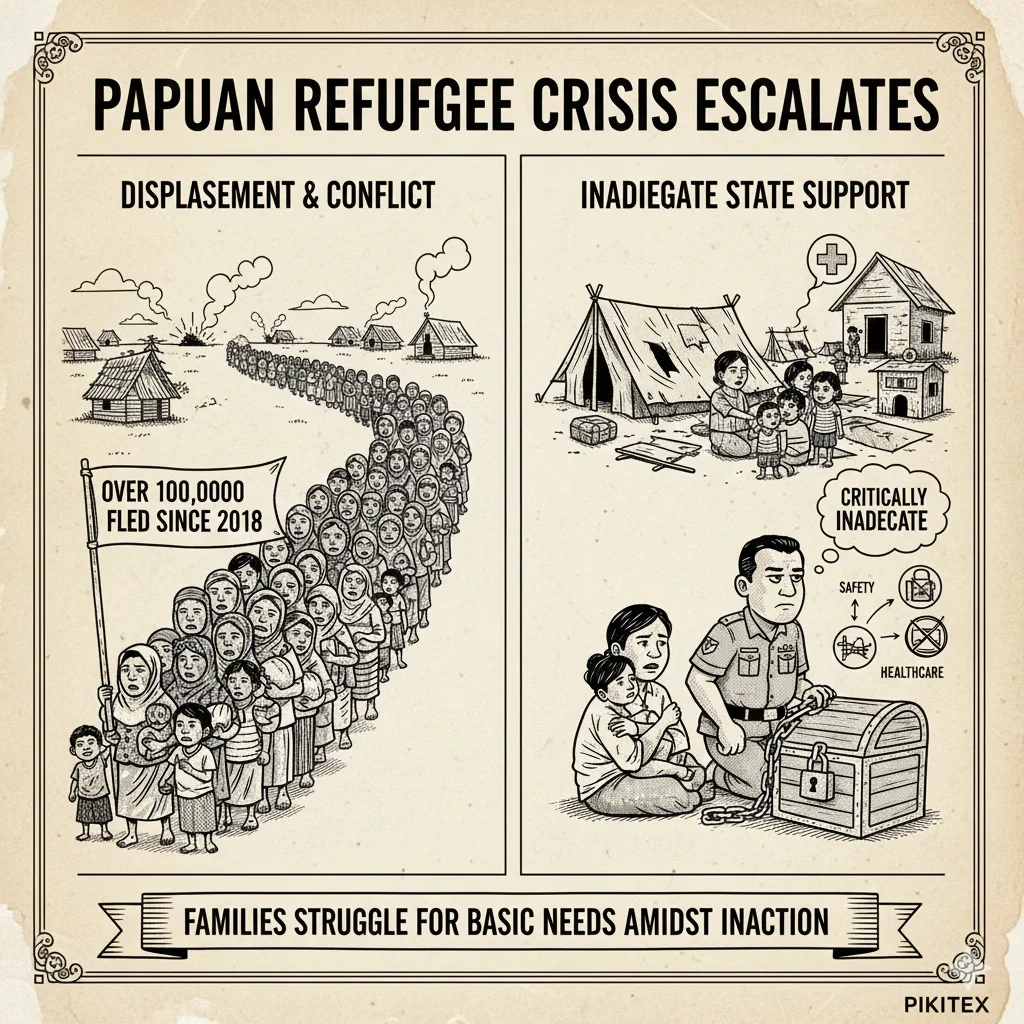
The Papua Conflict has triggered one of Indonesia’s most significant internal displacement crises in decades, with more than 100,000 indigenous Papuans forced to flee their homes since 2018. Rights groups warn that despite years of escalating violence between separatist fighters and Indonesian security forces, state assistance remains gravely insufficient, leaving families without stable access to shelter, education, healthcare or security.
A Humanitarian Crisis Entering Its Seventh Year
According to local monitors and church-led humanitarian networks, the number of displaced continues to climb as clashes spread across the highland regions, including Nduga, Intan Jaya, Puncak, and Yahukimo. Many of the displaced are women, children and elderly Papuans who have sought refuge in forests, neighboring districts, or makeshift church shelters.
Activists say conditions are dire. Many displaced families lack basic necessities such as food, sanitation, medical care and safe learning spaces. Schools have been shut down in conflict zones, leaving thousands of children without education for years. Healthcare access is also minimal, with reports of preventable deaths from malaria, pneumonia and childbirth complications.
Rights Groups: Aid Response “Dangerously Inadequate”
Human rights organizations, including KONTRAS and human rights desks run by local churches, have repeatedly criticized the Indonesian government’s slow and fragmented response. They argue that the national displacement figures remain underreported and that state support is inconsistent or absent in many affected regions.
Several groups say the Indonesian authorities have not established a coordinated humanitarian mechanism for IDPs in Papua, leaving much of the burden on churches, civil society and local volunteers. The lack of government acknowledgment of the scale of displacement has also hindered access to national relief funds and emergency services.
Community leaders argue that without recognition of the crisis, displaced Papuans continue to fall through systemic gaps. Many families have been living in limbo for years, unable to return home due to ongoing military operations while receiving little to no formal support where they currently stay.
Escalation of Conflict and Ongoing Militarization
The Papua Conflict intensified following the 2018 killing of construction workers by a separatist faction, prompting heavy military operations in highland areas. Since then, armed clashes, raids and counter-insurgency actions have expanded across multiple districts. Both separatist fighters and Indonesian security forces have suffered casualties, but civilians remain the most affected population.
Local human rights bodies have documented repeated reports of homes burned, villages emptied, and public infrastructure damaged during operations. Activists also warn that militarization deepens distrust between the government and indigenous communities, complicating access for humanitarian workers and journalists.
Children and Women Bear the Heaviest Burden
Of the estimated 100,000 displaced, rights groups say a large majority are children. Many have not attended school since 2019 or earlier. Teachers have fled conflict zones, and school buildings in several districts have been damaged or abandoned.
Women face heightened risks, including lack of reproductive healthcare, food insecurity, and exposure to violence when searching for basic supplies. Some communities report that pregnant women walk for hours or days to access the nearest clinic, often arriving too late.
Calls for Urgent Intervention and Long-Term Solutions
Civil society groups are urging the Indonesian government to:
- Officially recognize the displacement crisis in Papua
- Establish a humanitarian task force specifically for highland IDPs
- Ensure humanitarian corridors for safe access
- Provide long-term recovery and resettlement plans
- Scale down military operations near residential areas
They argue that without immediate intervention, the humanitarian fallout of the Papua Conflict will worsen, deepening poverty, instability and mistrust for generations.