
India Gen Z democracy remains remarkably resilient, even as neighbouring South Asian countries face youth-led uprisings. Analysts say India’s political institutions, economic optimism, and civil society structures anchor young voters in formal democratic channels rather than street protests.
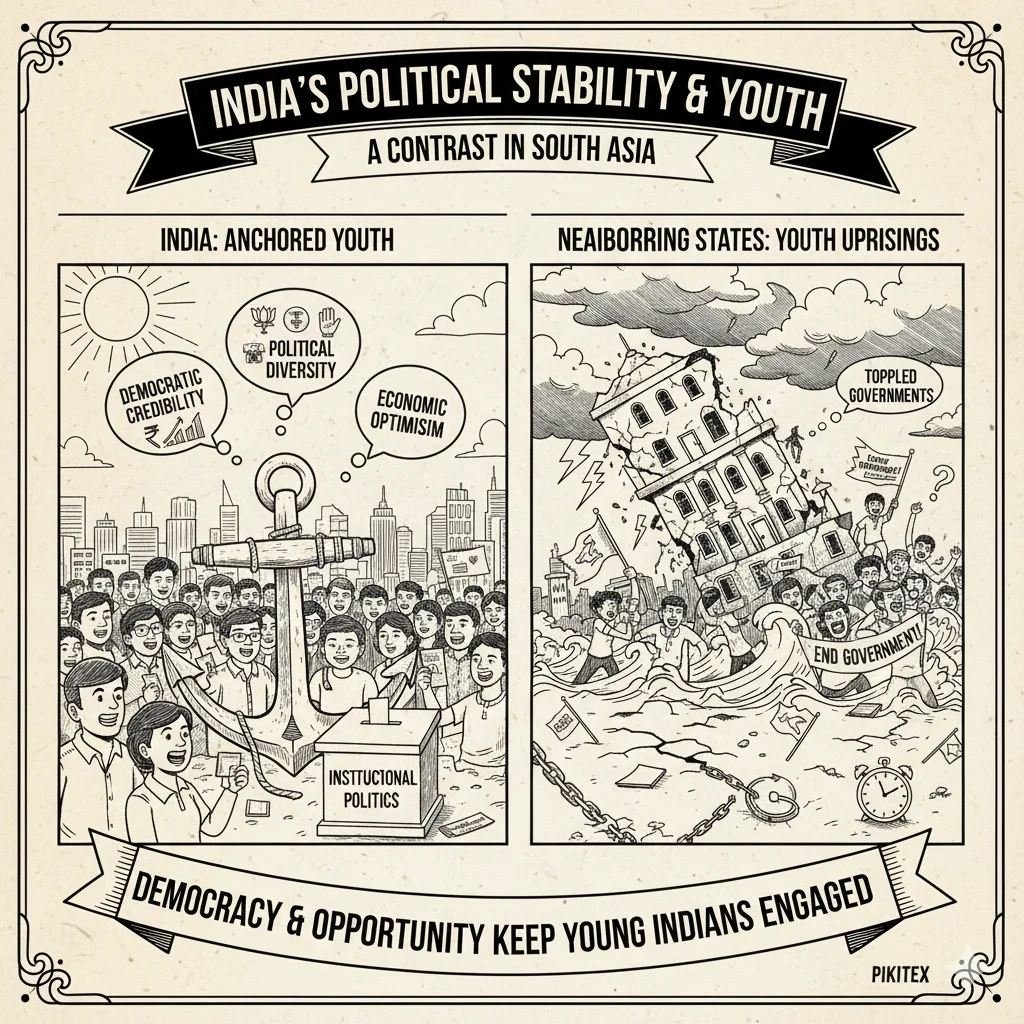
Youth-Driven Stability in India vs. Regional Turmoil
While countries like Nepal, Pakistan, Bangladesh, and Sri Lanka have experienced violent youth-led unrest, India’s Gen Z continues to engage through electoral participation. Nepal, for example, witnessed intense protests over social media restrictions, highlighting widespread dissatisfaction among young citizens. By contrast, Indian youth rely on institutional mechanisms, channeling their energy into voting and civic engagement rather than disruptive demonstrations.
The NDA’s sweeping win in Bihar’s 2025 state elections illustrates this trend. Young voters contributed significantly to the mandate, demonstrating patience and trust in democratic processes even as nearby nations struggled with political upheaval. Analysts argue that India’s multi-party system and federal structure provide alternative avenues for dissent, reducing the appeal of mass protests.
Factors Supporting Gen Z Engagement in Democracy
Several elements reinforce India Gen Z democracy:
- Credible Electoral System: Free and fair elections give youth confidence that political change can be achieved without street-level unrest.
- Political Diversity: Multiple parties allow Gen Z to explore options and express dissent responsibly.
- Economic Opportunities: Digital growth, start-ups, and an expanding middle class give young citizens a tangible stake in national stability.
- Nationalist Messaging: Certain segments of Gen Z align with state narratives, decreasing appetite for upheaval.
- Open Civil Society: Free press and social media spaces allow for criticism and debate without escalating into rebellion.
Experts note that when credibility, opportunity, and civic freedom coexist, youth channel frustrations into democratic participation rather than violence.
Digital Engagement and Civic Participation
India’s Gen Z has grown up in a connected digital environment. Surveys show young voters trust electoral processes and increasingly use digital platforms for advocacy, debate, and political awareness. Social media provides space for discourse while discouraging escalation into physical protests. Furthermore, entrepreneurial growth and tech opportunities strengthen their investment in the stability of democratic institutions.
Implications for India’s Political Future
The patience of India’s youth highlights the potential for long-term political stability in a region prone to unrest. By nurturing democratic participation and providing economic and civic incentives, India sets a model for other South Asian nations struggling to manage youth discontent. Future policy should continue to strengthen civic education, digital engagement, and inclusive economic growth to maintain this trend.
India Gen Z democracy, therefore, demonstrates how strong institutions, credible elections, and opportunities for youth engagement can sustain political stability, even amid regional turbulence. As the next generation of voters matures, their continued faith in democratic processes will be essential in shaping India’s political landscape.
For the latest updates from India, visit our India news page.