
Australia and Indonesia have officially concluded negotiations on a new bilateral security treaty, marking a major step forward in strengthening defense cooperation between the two Indo-Pacific neighbors. The agreement, finalized on November 12 during high-level talks in Sydney, reinforces both countries’ shared commitment to maintaining peace, stability, and strategic balance in a region facing growing geopolitical pressures.
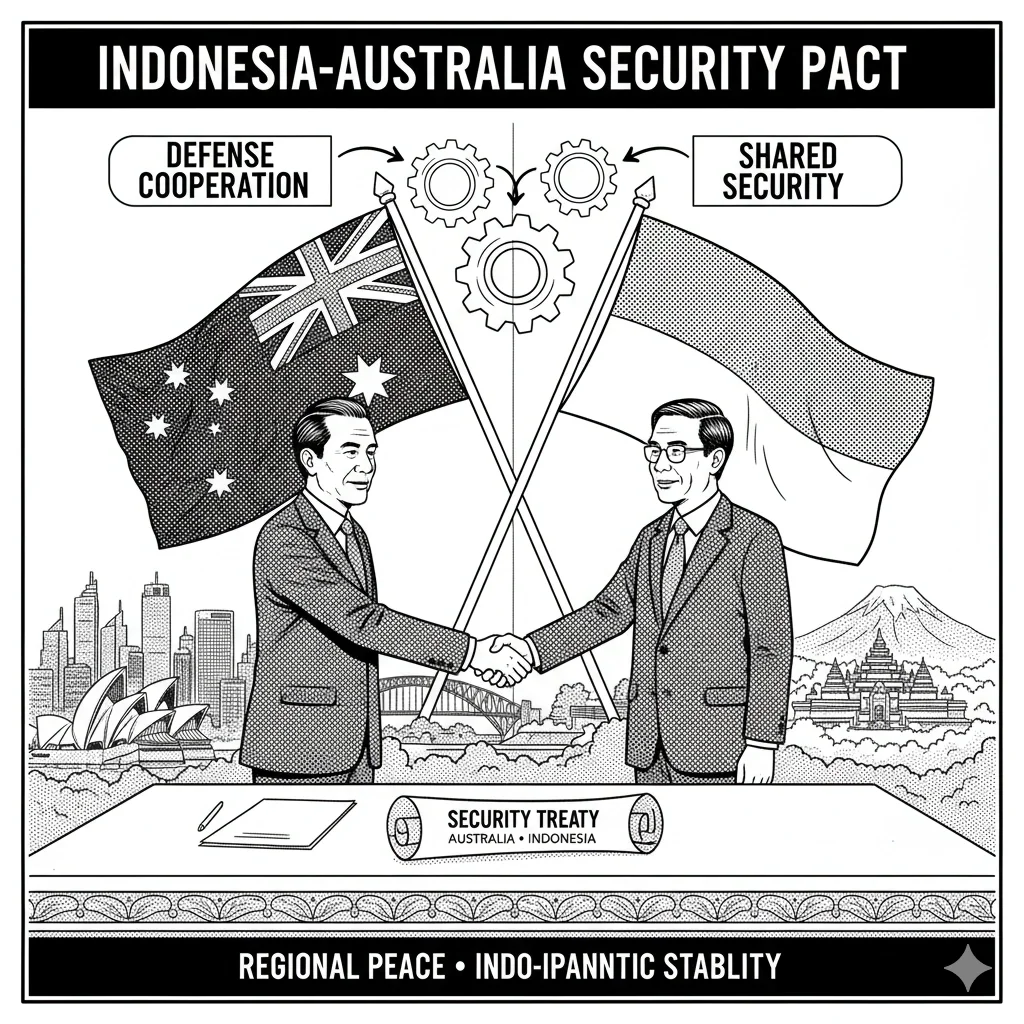
Australian Prime Minister Anthony Albanese and Indonesian President Prabowo Subianto announced the development during a joint press conference, noting that the two sides have “substantively concluded negotiations on a new bilateral treaty on our common security.” The treaty is expected to be formally signed in the coming months.
A Strategic Partnership for a Tense Indo-Pacific
The Australia Indonesia security treaty comes at a time when the Indo-Pacific region is witnessing increasing maritime disputes, rising military competition, and evolving security challenges. Both Australia and Indonesia have emphasized the importance of collective action, with Albanese declaring, “The best way to secure peace and stability is by acting together.”
This new agreement is seen as a natural extension of the growing alignment between Canberra and Jakarta in recent years. Analysts observe that the treaty not only deepens strategic trust but also positions both nations as stronger contributors to regional security.
Key Areas of Cooperation
Though full details of the treaty have yet to be publicly released, officials from both sides highlight several pillars of cooperation:
1. Defense Collaboration
The treaty will advance joint military exercises, capability development, and coordinated responses to regional threats. Both countries are expected to expand engagement between their armed forces, focusing on interoperability and joint preparedness.
2. Intelligence Sharing
With rising cyber threats and strategic competition in the region, enhanced intelligence-sharing mechanisms are central to the agreement. This strengthens the countries’ ability to identify and respond to emerging challenges.
3. Maritime Security
Maritime safety and sovereignty have become pressing issues in the Indo-Pacific. The treaty strengthens patrol coordination, information exchange, and joint efforts to maintain secure maritime zones, particularly around critical sea lanes.
4. Counterterrorism Initiatives
Australia and Indonesia have long cooperated on counterterrorism. The new treaty reinforces efforts to disrupt transnational threats and extremist networks.
Why This Treaty Matters
The Australia Indonesia security treaty is widely regarded as a significant diplomatic milestone.
For Australia, it strengthens ties with one of its most important regional neighbors and enhances its strategic influence in Southeast Asia.
For Indonesia, it supports broader national security goals and positions Jakarta as a central actor in shaping Indo-Pacific stability—especially as global powers expand their presence in the region.
Regional and Global Reactions
International security analysts note that the treaty could help counterbalance rising tensions involving major powers in the Indo-Pacific. By reinforcing bilateral cooperation, Australia and Indonesia are sending a message that regional stability should be shaped by local partnerships rather than external rivalry.
The agreement also aligns with broader efforts by ASEAN countries to maintain a free, open, and stable Indo-Pacific. While major powers are increasing their military presence, regional actors are seeking cooperative solutions that prioritize sovereignty and dialogue.
What Comes Next
The treaty is expected to undergo formal signing procedures soon and may include additional frameworks for economic and technological cooperation linked to security. Both leaders expressed confidence that the agreement will serve as a long-term foundation for peace and resilience in the Indo-Pacific.
As Australia and Indonesia continue to strengthen their partnership, the Australia Indonesia security treaty marks a defining moment in regional diplomacy—one that reinforces the need for unity, collaboration, and shared responsibility in safeguarding the region.