
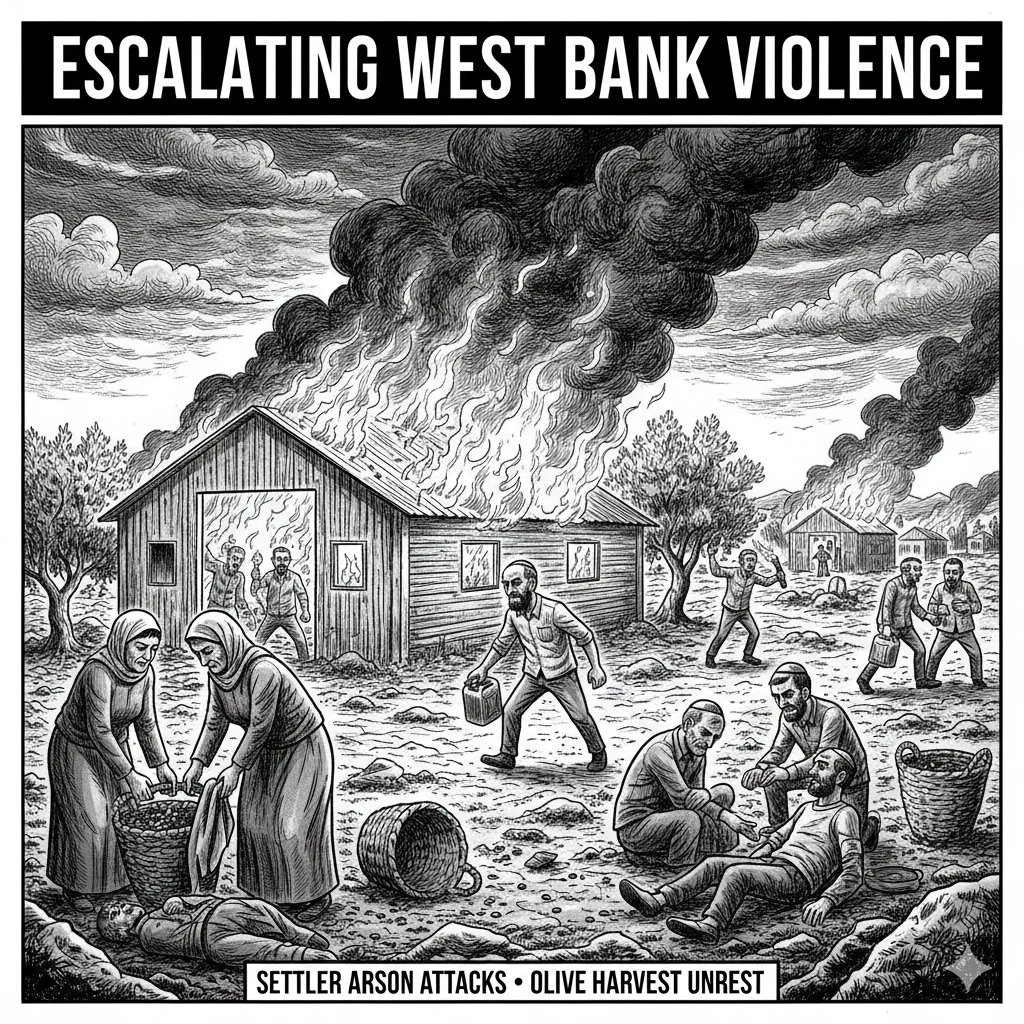
Dozens of Israeli settlers arson attacks West Bank have intensified in the northern occupied territories, targeting Palestinian property, farmland, and residential areas during the peak olive harvest season. On November 12, multiple fires broke out after settlers set ablaze a warehouse, a Bedouin village, and adjacent agricultural lands, leaving several Palestinians injured as they tried to control the infernos.
A Pattern of Violence During Olive Harvest
The recent surge in attacks aligns with a long-observed pattern: tensions often escalate when Palestinians access olive groves to harvest crops. Human rights organizations have repeatedly highlighted that settler violence spikes during this time, with incidents ranging from property destruction to physical assaults on farmers. The November 12 arson attacks are a stark example of this seasonal vulnerability.
Scale of the Attacks
Local sources reported that fires quickly spread across farmland, threatening crops critical for local livelihoods. The arson of a warehouse and a nearby Bedouin village added to the destruction, leaving residents displaced and concerned about future security. Several Palestinians sustained injuries while attempting to extinguish the flames, underscoring the physical risks accompanying these attacks.
The United Nations Office for the Coordination of Humanitarian Affairs (OCHA) recently documented a record-high level of settler attacks in October, marking the most severe month in nearly 20 years of data collection. This trend highlights a broader pattern of escalating violence in the northern West Bank, with both economic and human costs mounting.
Responses from Palestinian and Israeli Authorities
Palestinian officials have condemned the attacks as deliberate attempts to intimidate and displace rural communities. Authorities have emphasized that such arson campaigns threaten agricultural livelihoods and undermine the safety of vulnerable populations in the West Bank.
Israeli authorities, however, have yet to release an official statement regarding the November 12 incidents. The lack of immediate accountability has drawn criticism from international observers and human rights groups, who argue that insufficient enforcement contributes to repeated attacks.
Humanitarian and Economic Implications
The attacks during olive harvest season have serious humanitarian implications. Olive trees are not only a primary source of income for many Palestinian families but also a cultural and symbolic cornerstone of Palestinian rural life. Damage to orchards and farmland can have long-term economic consequences, reducing harvest yields and threatening food security for local communities.
Beyond the immediate property damage, repeated arson attacks exacerbate displacement pressures in rural areas. Families in affected villages often face heightened anxiety, limited access to agricultural resources, and disruption of daily life.
International Observers Call for Action
International organizations, including the UN and various NGOs, have urged both Israeli and Palestinian authorities to implement protective measures. Observers stress that protecting civilians and agricultural property during critical periods such as the olive harvest is essential to reducing conflict and preventing further escalation.
The ongoing Israeli settlers arson attacks West Bank represent a persistent challenge for maintaining safety, stability, and access to farmland in contested areas. With seasonal patterns likely to continue, monitoring, reporting, and swift intervention remain key to safeguarding Palestinian communities.
Looking Ahead
As tensions continue, Palestinians and humanitarian agencies are calling for increased protection of vulnerable areas and stronger enforcement against perpetrators. Without decisive action, the cycle of violence and destruction during the olive harvest could persist, affecting livelihoods, safety, and regional stability.
Source: BBC News