
France may record its first annual food trade deficit in nearly five decades. Rising tariffs, commodity costs, and declining competitiveness threaten the nation’s historic agricultural surplus that has lasted since 1978.
France Food Trade Deficit: Historic Surplus at Risk
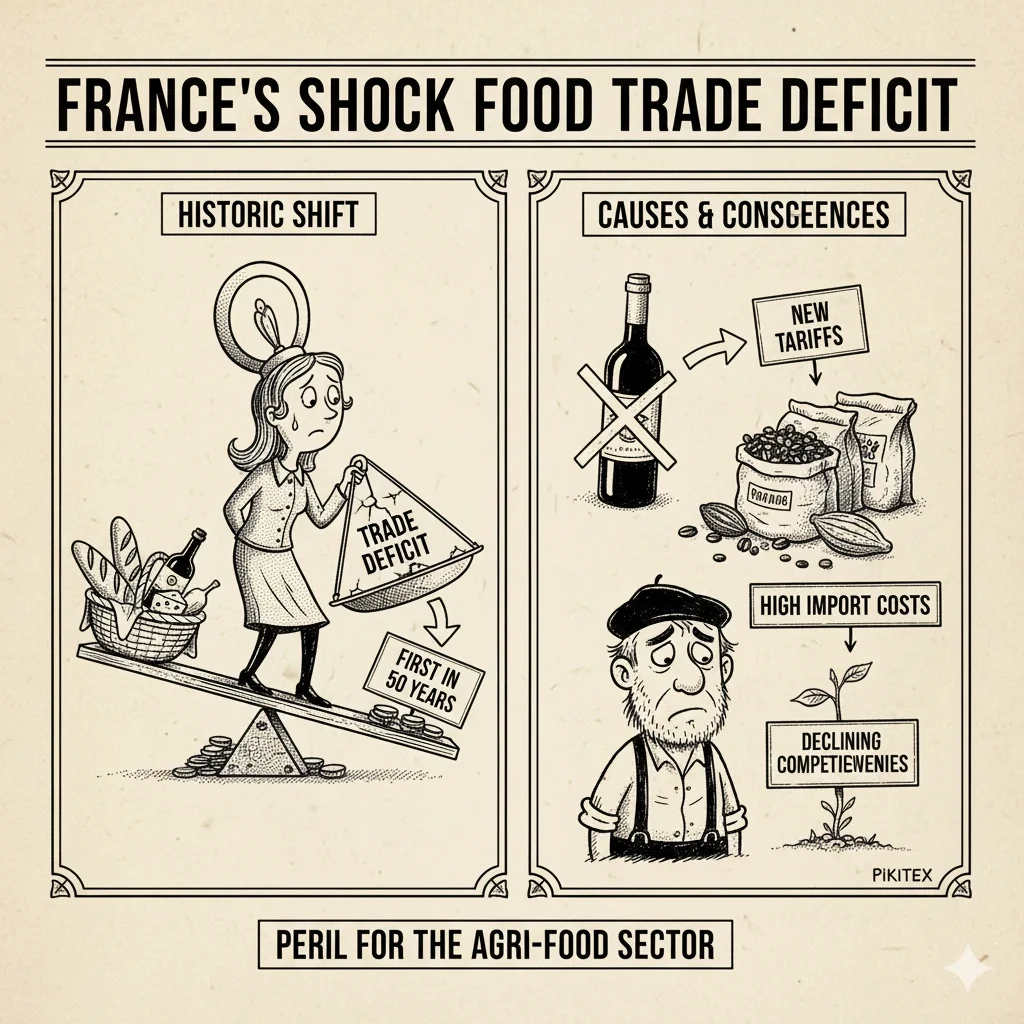
The France food trade deficit concern has become reality in 2025. The agri-food sector posted a cumulative negative balance of €351 million for January through September. This marks a dramatic shift for a sector historically recognized as a strong export earner.
France’s agricultural trade surplus has remained unbroken since 1978. However, 2025 may end this remarkable 47-year streak. Multiple economic pressures converge to threaten French agricultural competitiveness on global markets.
Tariffs and Import Costs Drive Agricultural Trade Imbalance
New tariffs on French wine exports significantly impact the trade balance. The United States and China imposed duties that reduced French wine shipments. These tariffs directly affect one of France’s most valuable agricultural exports.
Rising import costs compound the France food trade deficit problem. Cocoa and coffee prices have surged on international markets. France imports substantial quantities of these commodities, driving up costs and widening the trade gap.
Despite a better cereal harvest boosting summer exports, gains proved insufficient. The positive cereal performance could not offset losses in other agricultural categories.
French Agri-Food Sector Trails European Competitors
Economists point to structural weaknesses in French agricultural marketing. France trails neighbors like Spain and Italy in promoting agri-food products abroad. These countries demonstrate superior strategies for capturing international market share.
Spain and Italy excel at branding and marketing their agricultural products globally. French producers struggle to match this effectiveness. The marketing gap contributes significantly to declining export performance.
Structural Challenges Weaken Export Competitiveness
High operational costs plague the French agri-food sector. Production expenses exceed those of European competitors. These elevated costs reduce profit margins and make French products less competitive internationally.
Regulatory hurdles further burden French agricultural producers. Complex compliance requirements increase administrative costs and slow market responsiveness. Competing nations often maintain more streamlined regulatory frameworks.
Labor costs in France remain among Europe’s highest. Combined with strict employment regulations, this creates additional competitive disadvantages. Producers face pressure to maintain quality while managing escalating operational expenses.
Industry Fears End of Historic Agricultural Surplus
The agri-food sector expresses deep concern about the France food trade deficit trajectory. Without strategic export initiatives, the deficit may become permanent. Industry leaders call for immediate government support and market access improvements.
Stakeholders emphasize the need for enhanced export promotion programs. France must invest in marketing campaigns showcasing premium agricultural products. Building stronger international brand recognition represents a critical priority.
The potential end of France’s 47-year surplus carries symbolic and economic weight. Agricultural exports traditionally contribute significantly to national economic strength. Losing this advantage would mark a profound economic shift.
Path Forward Requires Strategic Export Investment
Experts recommend comprehensive reforms to reverse the France food trade deficit trend. France needs aggressive trade diplomacy to reduce foreign tariffs. Negotiating better market access terms with the U.S. and China remains essential.
Domestic reforms must address cost and regulatory challenges. Streamlining compliance processes could improve competitiveness without sacrificing quality standards. Supporting innovation in agricultural technology may also reduce production costs.
The coming months will determine whether France can restore its agricultural trade surplus. Industry and government must collaborate on solutions. The historic streak since 1978 hangs in the balance as 2025 concludes.