
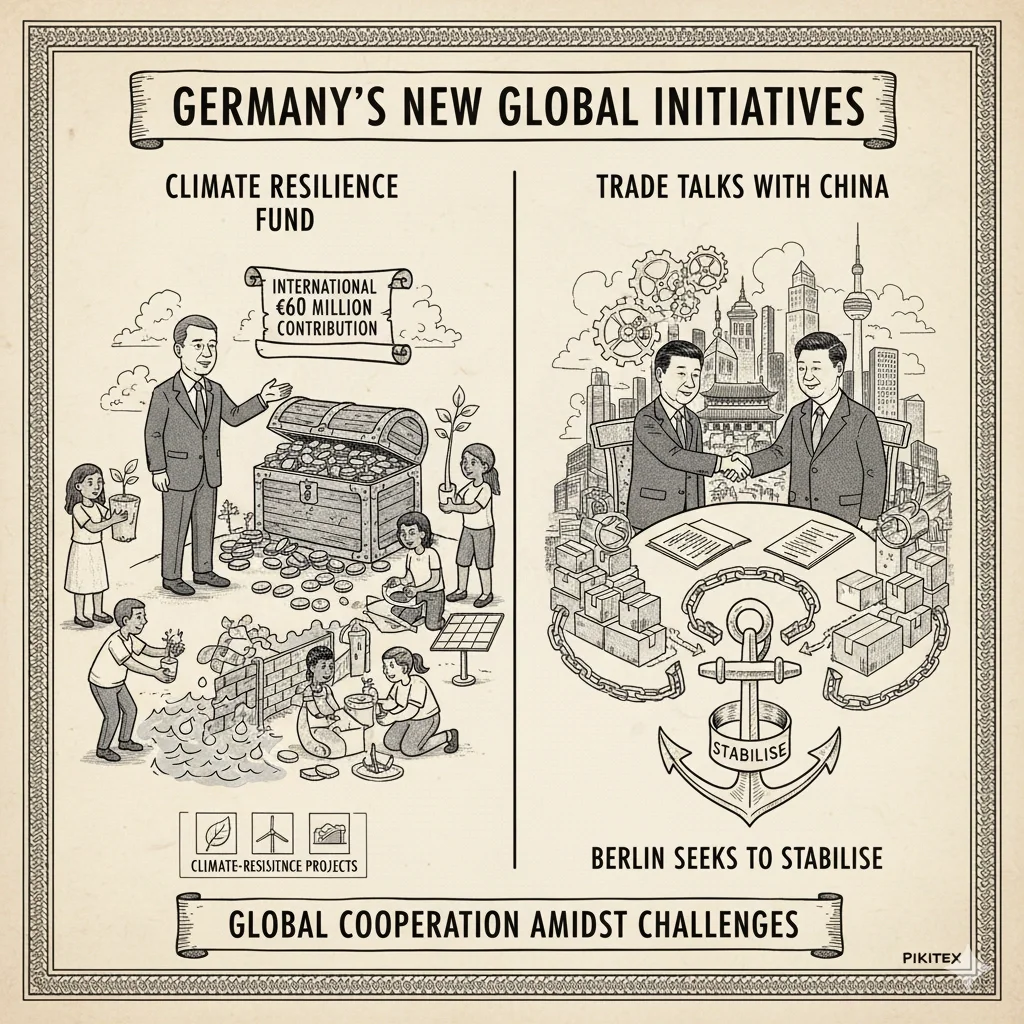
Germany climate fund contributions reached a new milestone as Berlin announced a €60 million pledge to the International Adaptation Fund on November 17, 2025. This significant commitment supports climate-resilience projects in developing nations facing increasingly severe environmental challenges and demonstrates Germany’s continued leadership in global climate finance.
Germany Climate Fund Contribution: Latest €60 Million Pledge
The Germany climate fund announcement came directly from Germany’s Environment Ministry, confirming the substantial new contribution to international climate adaptation efforts. This pledge represents Germany’s ongoing commitment to supporting vulnerable nations as they build resilience against climate change impacts.
The International Adaptation Fund receiving this Germany climate fund contribution has already allocated $1.4 billion since its establishment in 2010. These funds have directly aided approximately 45 million people across developing nations, supporting projects ranging from drought-resistant agriculture to coastal protection infrastructure.
Germany’s latest Germany climate fund pledge adds to an impressive total contribution of €610 million, solidifying Berlin’s position as the largest donor to the International Adaptation Fund. This leadership role reflects Germany’s recognition that climate adaptation requires sustained, substantial financial commitment from wealthy nations.
Why the Germany Climate Fund Matters for Developing Nations
The Germany climate fund contributions provide essential resources for developing countries lacking financial capacity to address climate impacts independently. Many vulnerable nations face severe climate threats including rising sea levels, extreme weather events, and agricultural disruption without adequate domestic resources.
Projects funded through the Germany climate fund and International Adaptation Fund focus on practical resilience measures. These include water management systems, climate-resistant crop development, early warning systems for natural disasters, and infrastructure upgrades to withstand extreme weather conditions.
The Germany climate fund approach emphasizes direct support to communities most affected by climate change. Rather than top-down initiatives, funded projects typically involve local stakeholders in designing and implementing adaptation strategies tailored to specific regional challenges and vulnerabilities.
Germany Climate Fund in Context: Berlin’s Broader Climate Leadership
The Germany climate fund pledge represents just one component of Germany’s comprehensive climate finance strategy. Berlin has consistently advocated for wealthy nations to fulfill and exceed their climate finance commitments to developing countries under international agreements.
Germany’s Germany climate fund contributions complement its domestic climate policies including renewable energy expansion, coal phase-out, and emissions reduction targets. This integrated approach demonstrates consistency between Germany’s international commitments and domestic climate action.
The timing of the Germany climate fund announcement coincides with broader international discussions on climate action and finance. As global leaders prepare for upcoming climate conferences, Germany’s pledge sets a positive example encouraging other wealthy nations to increase adaptation support.
Germany China Trade Talks: Parallel Economic Discussions
Alongside the Germany climate fund announcement, German Vice Chancellor Lars Klingbeil held significant talks with China’s Vice Premier He Lifeng to address trade tensions and economic cooperation. These discussions focused on stabilizing bilateral relations amid global economic uncertainty.
The talks between Klingbeil and He Lifeng addressed supply chain security, a critical concern for Germany’s export-oriented economy. Both sides agreed on strengthening cooperation to ensure reliable supply chains supporting their interconnected industrial sectors and manufacturing operations.
While distinct from the Germany climate fund announcement, these economic talks reflect Germany’s comprehensive international engagement strategy. Berlin seeks to maintain strong economic relationships while advancing climate leadership and addressing global environmental challenges through financial contributions.
Industrial Sector Stabilization in Germany China Discussions
The Germany-China discussions specifically focused on stabilizing industrial sectors experiencing economic pressure. German manufacturing, particularly automotive and machinery sectors, depends significantly on Chinese supply chains, components, and market access for sustained competitiveness.
Both German and Chinese officials acknowledged mutual economic interests during the talks. Securing supply chain reliability benefits both nations’ industrial sectors, supporting employment, innovation, and economic growth in an increasingly challenging global economic environment.
These parallel developments—the Germany climate fund pledge and China trade talks—demonstrate Germany’s multifaceted diplomatic approach. Berlin navigates complex international relationships while maintaining commitments to climate action, economic stability, and multilateral cooperation.
Germany Climate Fund: Historical Context and Impact
The Germany climate fund contributions build on decades of German climate finance leadership. Germany has consistently ranked among the top contributors to international climate initiatives, recognizing that wealthy industrialized nations bear responsibility for supporting vulnerable countries.
Historical Germany climate fund allocations have supported hundreds of adaptation projects across Africa, Asia, Latin America, and small island developing states. These projects demonstrate measurable impact including improved food security, reduced disaster vulnerability, and enhanced community resilience.
The International Adaptation Fund receiving this Germany climate fund contribution operates under the United Nations Framework Convention on Climate Change and Kyoto Protocol. This institutional framework ensures transparent governance, effective project selection, and accountability for climate finance delivery.
How Germany Climate Fund Projects Are Selected and Implemented
Germany climate fund contributions flow through the International Adaptation Fund’s rigorous project selection process. National implementing entities in recipient countries submit proposals addressing specific climate vulnerabilities and adaptation needs in their regions.
Projects receiving Germany climate fund support must demonstrate clear adaptation benefits, cost-effectiveness, and community involvement. The selection process prioritizes initiatives with strong local ownership, sustainable implementation plans, and measurable outcomes supporting climate resilience.
Monitoring and evaluation accompany all Germany climate fund supported projects. Regular reporting ensures funds achieve intended impacts, lessons learned inform future initiatives, and accountability mechanisms maintain donor and recipient country confidence in the adaptation finance system.
Germany’s Broader November 2025 Climate and Economic Agenda
The Germany climate fund announcement formed part of Germany’s key developments shared on November 17, 2025. Berlin used this date to communicate multiple significant policy initiatives spanning climate finance, economic diplomacy, and international cooperation.
Germany’s coordinated announcements—including the Germany climate fund pledge and China trade discussions—reflect strategic communication of Berlin’s international priorities. This approach demonstrates Germany’s commitment to addressing interconnected global challenges through sustained diplomatic engagement.
The Germany climate fund contribution coincides with Germany’s ongoing efforts to mobilize climate finance at scale. Berlin advocates for increased adaptation funding alongside mitigation investments, recognizing that many communities already experience severe climate impacts requiring immediate resilience support.
International Reactions to Germany Climate Fund Pledge
The Germany climate fund announcement received positive responses from developing nations and climate advocacy organizations. Many welcomed Germany’s continued leadership and called on other wealthy nations to match Berlin’s commitment level and sustained contribution pattern.
Climate finance experts noted that the Germany climate fund pledge, while significant, represents only a fraction of total adaptation funding needs. Estimates suggest developing countries require hundreds of billions annually for adequate climate adaptation, highlighting the scale of the global challenge.
International climate organizations emphasized that the Germany climate fund contribution demonstrates the importance of predictable, long-term climate finance commitments. Sustained funding allows recipient countries to plan multi-year adaptation programs rather than relying on uncertain, year-to-year allocations.
Future Outlook for Germany Climate Fund Contributions
The Germany climate fund pledge signals Germany’s intention to maintain climate finance leadership through upcoming international negotiations. Berlin will likely use this contribution to encourage other wealthy nations to increase their adaptation finance commitments at future climate conferences.
Germany’s next steps regarding the Germany climate fund may include advocating for innovative climate finance mechanisms, debt relief linked to climate action, and expanded private sector participation in adaptation investments. Berlin seeks to mobilize resources at the scale required for global adaptation needs.
The Germany climate fund contribution also positions Germany favorably in international climate diplomacy. As nations negotiate enhanced climate commitments and finance architecture, Germany’s demonstrated leadership strengthens its influence in shaping future climate governance frameworks.
Germany’s €60 million pledge to the International Adaptation Fund underscores Berlin’s recognition that Germany climate fund contributions represent both moral responsibility and strategic investment. Supporting climate resilience in vulnerable nations contributes to global stability, sustainable development, and collective capacity to address humanity’s defining environmental challenge.