
Banks tighten checks on money transfers, even when clients move funds between their own accounts. Financial institutions across Russia and abroad are introducing tougher anti-money-laundering (AML) procedures that can temporarily block or delay internal transfers until verification is complete.
Analysts say these measures reflect growing regulatory pressure to detect suspicious activity — including circular transactions, unexplained cash movements, and accounts used for potential tax evasion or money laundering.
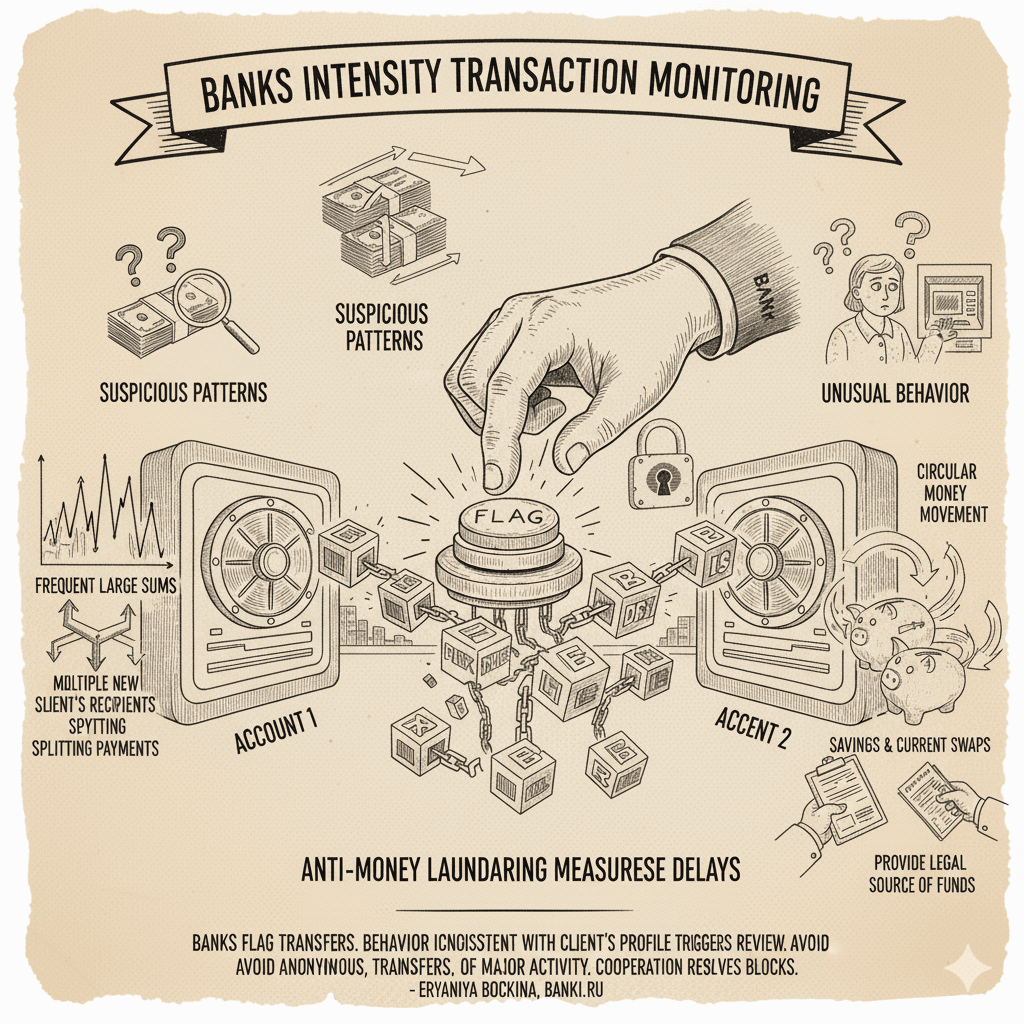
Why Banks Tighten Checks on Internal Transfers
According to Banki.ru analyst Eryaniya Bochkina, banks are increasingly using AI-driven transaction monitoring systems that automatically flag activity inconsistent with a customer’s usual financial behavior.
“Frequent transfers of large sums, multiple new recipients, or splitting one large payment into several smaller ones can trigger suspicion,” Bochkina explained.
Once a transaction is flagged, the bank may temporarily freeze the operation and request documents proving the legal source of funds. Typical verification materials include income statements, contracts, or receipts confirming the transaction’s legitimacy.
Common Triggers for Account Freezes
Bochkina noted that banks tighten checks particularly when the following red flags appear:
- Sudden or large cash withdrawals
- Rapid money movement between personal accounts
- Transfers to recently added recipients
- Repetitive payments without clear explanation
- Vague or misleading payment descriptions
Even though such actions may be harmless, they can appear irregular when compared to a client’s historical account activity.
How to Avoid Suspicion During Transfers
Experts advise customers to plan large internal transfers carefully and notify their bank in advance. Using clear, specific payment descriptions — such as “personal savings transfer” or “investment account top-up” — helps minimize misunderstandings.
Bochkina also recommends avoiding “anonymous-looking” transactions or moving the same money back and forth between savings and checking accounts too frequently.
“Circular money movement doesn’t just raise compliance flags — it can also reduce returns on your savings,” she warned.
If a transfer is frozen, quick cooperation with bank staff and submission of requested documents usually resolves the situation swiftly once legitimacy is verified.
Banks Tighten Checks to Meet Global AML Standards
Regulators have urged banks to step up due diligence as global financial crimes become more sophisticated. The Central Bank of Russia and international watchdogs such as the Financial Action Task Force (FATF) have emphasized stronger compliance with global AML standards.
These updated systems use algorithms to detect suspicious patterns in near-real time, identifying risks faster than traditional manual reviews. While this adds friction for law-abiding clients, banks argue it’s essential to maintain transparency and prevent illicit financial flows.
What Clients Should Do if Their Account Is Blocked
If your account or transfer is temporarily blocked, analysts recommend taking these steps:
- Contact your bank immediately to understand the reason.
- Provide supporting documents proving the legal origin of the funds.
- Avoid multiple follow-up transfers until the issue is resolved.
- Maintain records of your regular transactions to simplify verification.
Typically, once the bank confirms the legitimacy of the funds, the hold is lifted, and operations return to normal.
As banks tighten checks and regulatory scrutiny increases, customers should focus on transparency and documentation. Clear financial communication, proactive disclosure, and cooperation with bank compliance teams can help prevent delays, ensuring that routine internal transfers proceed smoothly.
For the full report, visit Banki.ru.
For more updates, visit the Russia News Section.