
Toyota Astra Motor (TAM) has officially launched the Toyota Veloz Hybrid Indonesia model, marking a major milestone for the Indonesian automotive industry and Toyota’s popular MPV lineup in Southeast Asia. Introduced at the 2025 Gaikindo Jakarta Auto Week, the new Veloz Hybrid becomes the first locally produced hybrid variant in the Veloz series, underscoring Toyota’s commitment to expanding eco-friendly mobility options in the region.
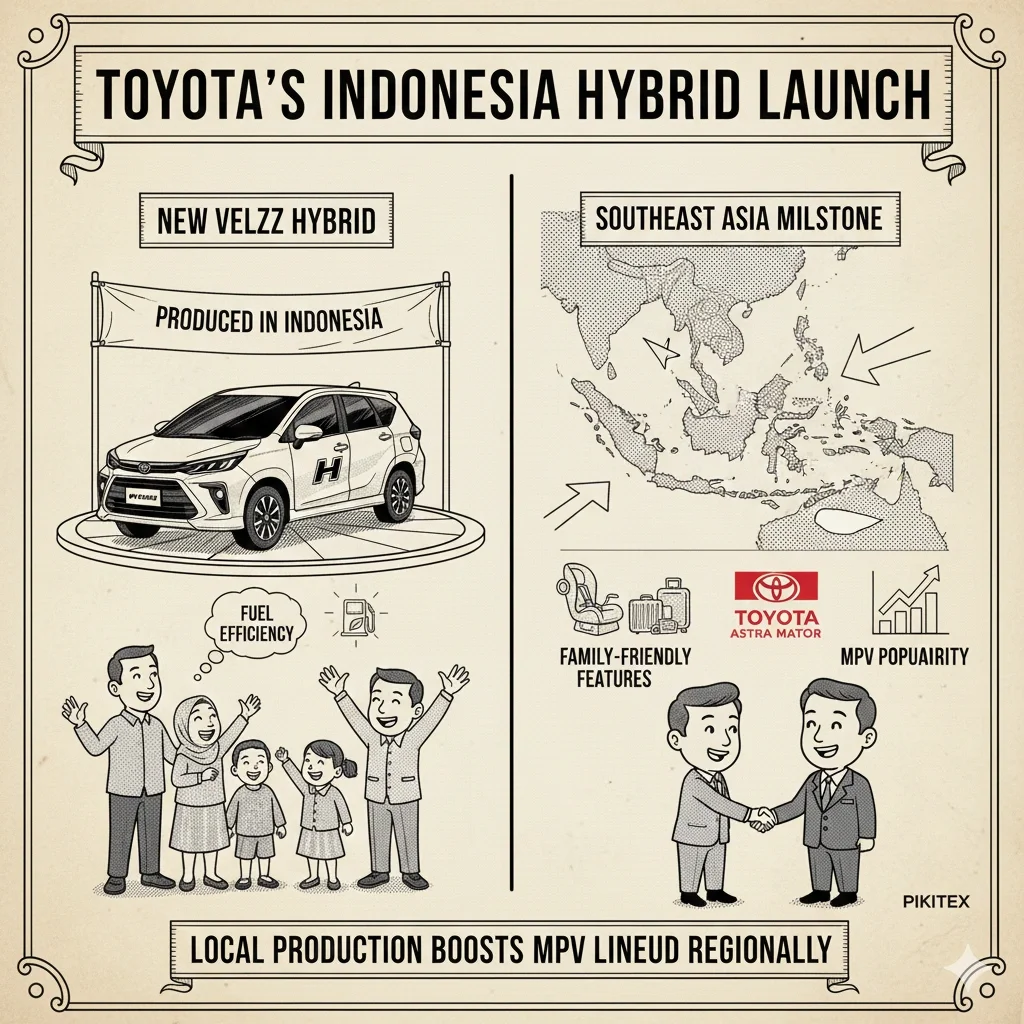
The new Toyota Veloz Hybrid is positioned as a family-oriented MPV that balances improved fuel efficiency, strong performance, and everyday practicality. As hybrid demand rises among Indonesian consumers who are not yet ready to transition fully to electric vehicles, the model arrives at the perfect time for middle-class households seeking lower fuel consumption without giving up conventional driving reliability.
Locally Manufactured Hybrid System
A key highlight of the Toyota Veloz Hybrid Indonesia launch is the vehicle’s local production, which represents a growing shift toward domestic hybrid manufacturing. The hybrid system integrates a 1.5-liter gasoline engine with an electric motor—technology adapted from Toyota’s successful Yaris Cross Hybrid.
The localized production is expected to lower long-term costs, strengthen Indonesia’s automotive supply chain, and support the government’s push for greener transportation technologies. This also positions Indonesia as a future production hub for Toyota hybrid vehicles across Southeast Asian markets.
Competitive Pricing for Indonesian Families
Toyota Astra Motor has priced the new Veloz Hybrid from Rp 299 million (approximately $17,900), placing it within the reach of Indonesia’s expanding middle-class segment. The pricing strategy reflects Toyota’s approach to making hybrid technology more accessible without compromising key features families expect from an MPV.
The model is equipped with a spacious cabin, multi-row seating, advanced infotainment systems, and enhanced safety features, making it suitable for urban families, long-distance travelers, and daily commuters.
A New Chapter for Toyota’s Best-Selling MPV
During the launch, TAM President Director Hiroyuki Ueda stated that the introduction of the Toyota Veloz Hybrid Indonesia marks “a new chapter” for one of Toyota’s most successful MPV lines in the region. The Veloz has consistently ranked among the best-selling MPVs in Indonesia, known for its durability, comfort, and solid performance.
With the hybrid variant now available, Toyota aims to broaden the Veloz’s appeal to eco-conscious buyers who prioritize fuel savings while maintaining the flexibility and space of a family MPV.
Displayed at Gaikindo Jakarta Auto Week Until November 30
The Toyota Veloz Hybrid is showcased throughout the 2025 Gaikindo Jakarta Auto Week, giving potential buyers hands-on experience with the new model. Toyota has set up interactive displays to highlight the hybrid system, fuel efficiency advantages, and driving modes that optimize performance.
Visitors at the exhibition can explore the vehicle’s interior, test its digital dashboard, and view demonstrations of Toyota’s hybrid synergy drive, a technology that seamlessly switches between electric and gasoline power for maximum efficiency.
Deliveries to Begin in 2026
While the hybrid model is officially launched, Toyota Astra Motor will begin customer deliveries in 2026, aligning with the company’s plan to scale up domestic hybrid production. Increasing production capacity will ensure stable supply throughout Indonesia and potentially open export opportunities in the future.
Meeting Growing Demand for Eco-Friendly Mobility
The launch of the Toyota Veloz Hybrid Indonesia reflects the nation’s growing interest in sustainable mobility solutions. While electric vehicle adoption is rising, many Indonesian drivers still prefer hybrids due to their practicality, familiar driving experience, and lack of dependence on charging infrastructure.
By offering a locally made hybrid MPV at an accessible price point, Toyota strengthens its leadership in Indonesia’s green automotive transition and meets the needs of families seeking a balance between sustainability, affordability, and comfort.